David Levering Lewis Quotes
The commitment to literacy was constant on the part of African Americans. And the percentages of literacy by the end of the century, by 1900, basic literacy has galloped ahead. People believed that education, of course, was the turnstile for advancement.
Lewis, David Levering. Interview. 1900, directed by David Grubin, American Experience, PBS, 1998.

Dr. Ambrose was the senior Black education official in the country. Note his title which was given to him by President Franklin Delano Roosevelt.


The organization was initially called the National Negro Committee. The following year the name was changed to the National Association for the Advancement of Colored People. Note that at the time, even for Blacks, the concept of desegregation was so far from reality that their efforts were simply to have segregated schools with the same resources as the white children had. The “separate but equal” doctrine was the method of the segregationists.

Den was a liberal reformer. There were many liberal politicians in Japan until the right wing militarists took over. Most Japanese were extremely racist and wanted education to be segregated, not unlike the American South at the time. Den’s action described in this quotation was earthshaking to many Japanese. Integration of the schools was to them bad enough, but assimilating Chinese into the Japanese society was much worse.

The Freedmen’s Bureau was an institution established after the Civil War to provide assistance to the newly emancipated and free slaves. Every constructive step taken by the Bureau was opposed and obstructed by “unreconstructed” Southerners and some Northerners. They had very limited resources and there was little known technically about how to accomplish their mission. However, tens of thousands of individual new freed Negroes profited immensely and there were some systemic successes such as Du Bois describes in this quotation. There were also some failures he believed—See Quotation 643645.


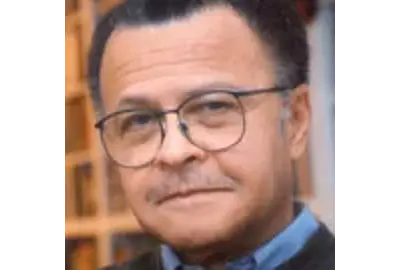
David Levering Lewis is an American historian, a Julius Silver University Professor, and a professor of history at New York University. He is twice winner of the Pulitzer Prize for Biography or Autobiography, for part one and part two of his biography of W. E. B. Du Bois (in 1994 and 2001, respectively). He is the first author to win Pulitzer Prizes for biography for two successive volumes on the same subject.
