Stephanie Coontz Quotes
The closer we get to achieving equality of opportunity between the sexes, the more clearly we can see that the next major obstacle to improving the well-being of most men and women is the growing socioeconomic inequality within each sex.
Coontz, Stephanie. "The Myth of Male Decline." The New York Times, 29 Sept. 2012.


The debate over income inequality generally ranges between the two extremes of Christie’s hypothetical equal, mediocre salary to the extreme wealth of the 1% controlling most of the wealth. However , where America was moving in its most general affluent times was not towards equal compensation, but to a large range of remuneration with the low end and middle constantly increasing over time and the high end a reasonable multiple of the low end. However, the breakdown came in the last decades of the 20th century and the early 21st century when the low end did not increase (discounting for inflation) in 40 years, nor did the middle, while the high end increased enormously. So the nation had 40 years of growth without the lower or middle classes benefitting much and all the benefit going to the wealthy and most of that to the very wealthy. Thus the instinct was to tax the wealthy more heavily and spending the money to increase opportunity for the lower and middle classes. However, the political battle was waged over the taxing issue and not on what could be done to have the poor and the middle class obtain a larger proportion of the growth and a smaller percentage of the setbacks.


This quotation from the Koran is used by some to show that Islam was ahead of the West in terms of allowing women to earn their own money and inherit property. In this sense Islam was in the 7th Century far ahead of their Christian and Jewish Counterparts.
However, with this initial start, there is no version of Sharia (Islamic Law) that provides for men and women to earn equally for equal work. Further, there is no right to work at all. In Saudi Arabia, until 2005 women shopping for their own underwear had to buy from men as women were not allowed to be retail clerks. And the Taliban in Afghanistan required women to remain in their home and not work any other place. Even female doctors and nurses were not allowed to work in hospitals. Although they were allowed to control whatever meager income they might earn in their homes.


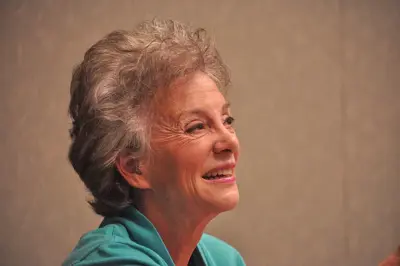
Stephanie Coontz is an author, historian, and faculty member at Evergreen State College. She teaches history and family studies and is Director of Research and Public Education for the Council on Contemporary Families, which she chaired from 2001 to 2004. Coontz has authored and co-edited several books about the history of the family and marriage.
