Vaclav Klaus Quotes
The climate change debate is basically not about science; it is about ideology. It is not about global temperature; it is about the concept of human society. It is not about nature or scientific ecology; it is about environmentalism, about one - recently born - dirigistic and collectivistic ideology, which goes against freedom and free markets.
Klaus, Václav. Blue Planet in Green Shackles: What Is Endangered: Climate or Freedom?. Competitive Enterprise Institute, 2008.

Preserving the environment in a modern state involves restrictions of various kinds ranging from limits on land use to prohibiting of hunting of endangered species. Each of these limits individual freedom somewhat. This is the main reason that there is a significant anti-environmentalism movement. Most laws and regulations restrict human freedom somewhat, and generally democratic societies limit these to the very necessary. But with environmentalism, more regulation is usually better environmentalism. Therefore such regulation is always a trade off with some human freedom.


This was his last House debate and whereas almost all scientists had agreed that climate change was a serious challenge to the nation, an ideologically driven majority of his Republican Party denied that that there was any climate change that was different from the usual vicissitudes of nature, he tried to persuade his anti-scientific, conservative colleagues to face reality.

He had been a vigerous global warming skeptic for some theoretical reasons having to do with how the theormometers measured temperature. He and his daughter put together a project to examine most of the data and make what he thought was a proper analysis. A significant part of his funding came from the ultra-conservative billionaire, Charles Koch who also funded the anti-global warming Heartland Institute. However, after Muller and his daughter finished their analysis, he surprised most and angered Koch, with this statement. The data had changed his mind.


Paulson, Michael Bloomberg and other politicians who had vast business experience were beginning a campaign to show the great danger to the economy of climate change and global warming.


Eugenics was an intellectual movement of the first half of the 20th century that was mostly junk science and was debunked. While the analogy is clever and makes her political point about climate change science, there are actually several major differences. Eugenics was never a set of scientific laws that had near unanimous support of all the scientists in that and related fields while climate science is. Eugenics was not an experimental science where its principles were subject to refutation with data. So called Eugenic scientists did no experiments, analyzed almost no data, and were more philosophical and political than scientific. Most of the Eugenics advocates were not scientists at all and had little or no training in science.


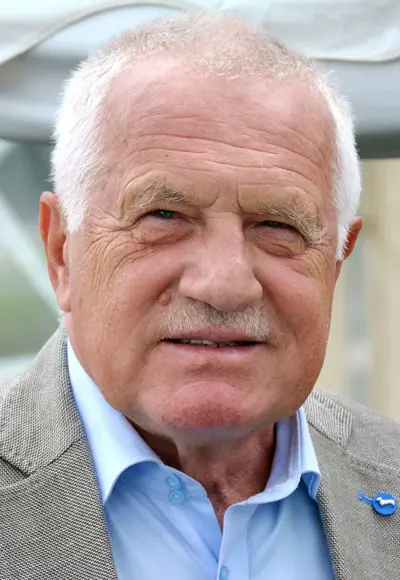
Václav Klaus is a Czech economist and politician who served as the second president of the Czech Republic from 2003 to 2013. From July 1992 until the dissolution of Czechoslovakia in January 1993, he served as the second and last prime minister of the Czech Republic while it was a federal subject of the Czech and Slovak Federative Republic, and then as the first prime minister of the newly independent Czech Republic from 1993 to 1998.
