Walter Benjamin Quotes
The class struggle … is a fight for the crude and material things without which no refined and spiritual things could exist. Nevertheless, it is not in the form of the spoils which fall to the victor that the latter make their presence felt in the class struggle. They manifest themselves in this struggle as courage, humor, cunning, and fortitude. They have retroactive force and will constantly call in question every victory, past and present, of the rulers
Walter Benjamin, 1892-1940, German Philosopher, On the Concept of History, 1940
Sourced by: Eigen's Political and Historical Quotations


The slogan was made famous by James Larkin, 1875–1947, Irish trade union leader who used it frequently and whose memorial statue in Dublin contains the quotation in French, English and Irish.


Saloth Sar Pol Pot. His view was that any small merchant or tradesman running a business was a capitalist, and all educated were enemies of the people. He moved entire populations out of the cities into the countryside where they would live as peasants or be murdered as about 20% of the entire population as. Therefore, in his warped view, the capitalists could no longer “control” Cambodia.

He was referring to the public unrest and dissatisfaction when an middle, poor or impoverished class is ground down by rigid interpretation and contract laws so that people in debt can rarely get out. He argues that this was a stark reality before most revolutions and a primary cause.


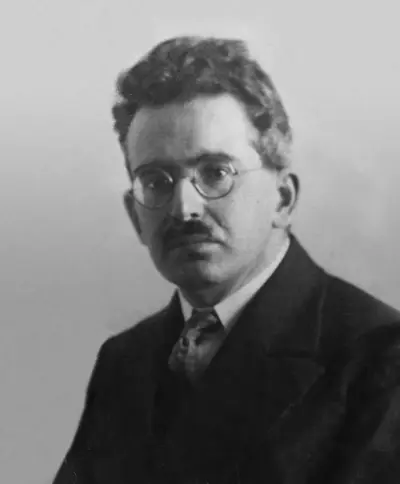
Walter Bendix Schönflies Benjamin was a German Jewish philosopher, cultural critic and essayist. An eclectic thinker, combining elements of German idealism, Romanticism, Western Marxism, and Jewish mysticism, Benjamin made enduring and influential contributions to aesthetic theory, literary criticism, and historical materialism. He was associated with the Frankfurt School, and also maintained formative friendships with thinkers such as playwright Bertolt Brecht and Kabbalah scholar Gershom Scholem. He was also related to German political theorist and philosopher Hannah Arendt through her first marriage to Benjamin's cousin Günther Anders.
