Henry Mayhew Quotes
The city of London, within the walls, occupies a space of only 370 acres, and is but the hundred and fortieth part of the extent covered by the whole metropolis.
Mayhew, Henry, and John Binny. The Criminal Prisons of London and Scenes of Prison Life. Griffin, Bohn, and Company, 1862, p. 12.


This is a counter-intuitive fact which surprises almost everyone. Note that he does not claim that the entire world population could all live in New York, but the enormous amount of indoor space is clearly illustrated by the fact that all could fit in to the city.


Roosevelt thought like Jefferson that it was not desirable to have a large proportion of the population residing in cities, and one of the more successful aspects of the New Deal with the improvement of conditions in rural America. Despite that, the trend to the cities was inexorable in America with the rest of the world following that trend.

Moses became the greatest “builder” the world had ever known. The Bridges and tunnels into New York, the highways in the city and Long Island, the development of Fire Island and the World Trade Center were all his work. Babbitt was a very large building and construction contractor. The Cold War was ongoing and his reference to civilian defense was an absurd notion of the 1950s that building bomb shelters in cities and homes could protect the civilian population in the event of nuclear attack. This was actually an official government position and program.


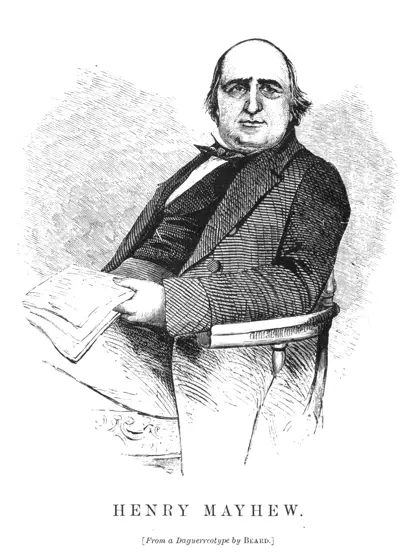
Henry Mayhew was a journalist, playwright, and advocate of reform. He was one of the co-founders of the satirical magazine Punch in 1841, and was the magazine's joint editor, with Mark Lemon, in its early days. He is also known for his work as a social researcher, publishing an extensive series of newspaper articles in the Morning Chronicle that was later compiled into the book series London Labour and the London Poor (1851), a groundbreaking and influential survey of the city's poor.
