William Gilpin Quotes
The citizen must be also a soldier and armed. The system of civil society is never safe from revolution and the shocks of sudden conspiracies, unless associated with and fortified by an equally vigorous discipline of its physical power.
William Gilpin, 1813-1894, Futurist & Governor of the Colorado Territory, First Message to the Citizens of the Legislative Assembly of Colorado Territory, September 10, 1861
Sourced by: Eigen's Political and Historical Quotations

The professor was addressing a theory of some gun rights advocates that the framers of the constitution intended the 2nd Amendment as a check on a dictatorial Federal Government. The history of the militias shows that they have been used by states never to foment rebellion but often called out to suppress rebellions of citizens who thought that their rights had been infringed such as Shays Rebellion, the Whisky Rebellion and the repeated use of state militias to enforce laws and quell riots and labor disputes.


More than a decade before Hamilton wrote this, a Maryland commission used the phrase “well regulated militia” earlier. (See {588394}.) It would be less than 2 years before the phrase “well regulated militia” would be added into the Constitution in the 2nd Amendment of the Bill of Rights—September 25, 1789. The Maryland resolution was the last of several passed at a meeting by which Maryland endorsed resistance to the British before the actual Revolution. So these resolations would have been widely distributed throughout the colonies and known by the leaders. Whether the drafters of the 2nd Amendment got the phrase from Hamilton’s Federalist 29 or from the Maryland Resolutions is not known but Hamilton’s was much more current. Did he get the phrase from Maryland? Did Congress get it from him? Did Maryland originate the phrase or was there an earlier use that influenced the Maryland drafters? At this point no one is sure, but the phrase is critical to the meaning of the 2nd Amendment because the Supreme Court has repeatedly held that the Second Amandment does not apply to individuals but only to the State’s right to bear arms within the “well regulated militia” and not as individual citizens. The right is that of the State government and that is why a state can control guns including banning them if they choose. So an individual in America does not have the constitutional right to bear arms. He may have a state constitutional right but in other states he may not use a gun in certain places and may not possess certain types of guns like hand guns which are illegal in New York, Washington DC and some other places.


President James Madison expressed a similar sentiment in his first inaugural address.


With martial law came the authority to seize ALL guns in the colony for the emergency. This was not to disarm the general populace. It reflected the fact that there were relatively few colonists who owned guns as they were very expensive. The Governor could take those that existed and use them to defend against the rebels or whatever. There were more gun owners in the Revolution but still a minority. Even after the War of 1812 only 30% of Americans were armed, and that shortly decreased to 10% as there was no real culture of gun ownership in early America. This would come around the Civil War.

In the early 18th century, things were very unsettled between Scotland & England with the succession of both countries in question. The result was the famous union of the two countries in 1707. At the time the Scottish Parliament wanted to intimidate the English as well as to be able to fend off English troops if things did not go well. The clause has much contemporary importance because it shows what a nation would do that wanted every man armed against powers which might restrict their freedom. The American Founding Fathers at the Constitutional Convention knew about this law. They even adopted other ideas from this law--{615975}. If the Founders had wanted every man armed as some modern gun control opponents maintain, they were brilliant drafters and would doubtless have written something like this. It supports the view that what was intended was not an armed nation but a nation where the states could organize “well ordered militias” and the Second Amendment resulted.


1st Baron Verulam. The word “estate’ meant a political unit or subunit. These might be ruled by kings, dukes, war lords, etc. However, Bacon’s point was all armaments and the physical trappings of war are relatively minor when compared to the qualities of the population. With modern technology, this principle has become less and less true. Given the same technology in war, the outcome will depend on the human qualities and warlike disposition of the humans. However, a modern force with modern equipment and weapons can defeat an enemy of braver and more warlike disposition which does not have the same technology. In the modern world, a number of cultures find this a very distressing reality. The noble and courageous man should win, but Western technology, many complain, is undermining the old, traditional virtues.


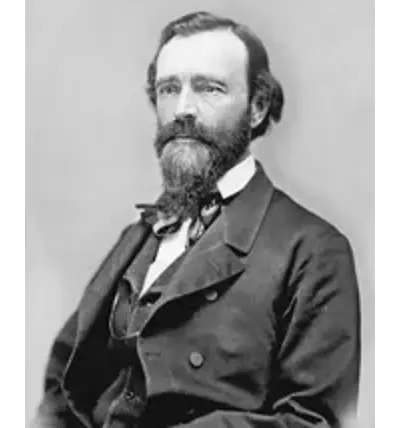
William Gilpin was a 19th-century US explorer, politician, land speculator, and futurist writer about the American West. He served as military officer in the United States Army during several wars, accompanied John C. Frémont on his second expedition through the West, and was instrumental in the formation of the government of the Oregon Territory. As a politician and writer, he was an inveterate believer in Manifest Destiny and was a visionary booster of new settlement to the West, helping lay the groundwork in his writings for a modern theory of the succession of civilizations.
