William Ellery Channing Quotes
The chief evil of war is more evil. War is the concentration of all human crimes. Here is its distinguishing, accursed brand. Under its standard gather violence, malignity, rage, fraud, perfidy, rapacity, and lust. If it only slew man, it would do little. It turns man into a beast of prey.
Channing, William Ellery. "War." The Works of William E. Channing, D.D., vol. 5, James Munroe and Company, 1841, p. 115.

This was part of the continual conflict between the Muslims and the Eastern Orthodox Christians. The Greeks ended up doubling their territory.


The Colonel defined people capable of bearing arms as males and females over 20 years of age. Many were slaughtered. Fortunately, most of his officers and men did not follow this order but enough did to make it one of the most disgraceful events in American military history. Smith was court marshaled and found guilty but his punishment was to be cashiered from the army. There were many atrocities committed by the minorities of both sides in this brutal war. Military and Congressional Investigations caused the army manual to be revised military policies reformed.


See Ferdinand I for the Bulgarian denial {601322}.

Although a very aggressive military commander, Grant did not approve of proposals to have wars of extermination which many called for against different Native American tribes.


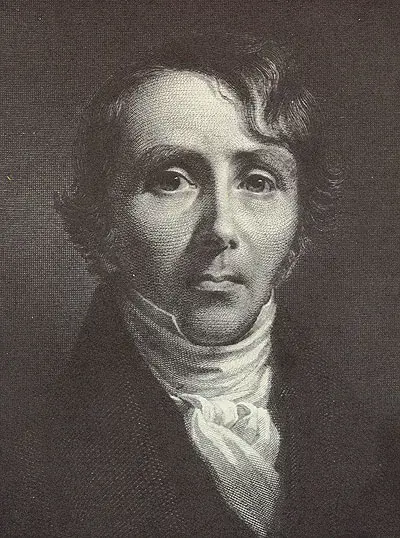
William Ellery Channing was the foremost Unitarian preacher in the United States in the early nineteenth century and, along with Andrews Norton (1786–1853), one of Unitarianism's leading theologians. Channing was known for his articulate and impassioned sermons and public speeches, and as a prominent thinker in the liberal theology of the day. His religion and thought were among the chief influences on the New England Transcendentalists although he never countenanced their views, which he saw as extreme. He espoused, especially in his "Baltimore Sermon" of May 5, 1819, given at the ordination of the theologian and educator Jared Sparks (1789–1866) as the first minister of the newly organized First Independent Church of Baltimore, the principles and tenets of the developing philosophy and theology of Unitarianism, leading to the organization in 1825 of the first Unitarian denomination in America (American Unitarian Association) and the later developments and mergers between Unitarians and Universalists, resulting finally in the Unitarian Universalist Association of America in 1961.
