Friedrich Engels Quotes
The British Labour movement is today, and for many years has been, working in a narrow circle of strikes that are looked upon, not as an expedient, and not as a means of propaganda, but as an ultimate aim.
Engels, Friedrich. "The Trades Unions." The Labour Standard, 28 May 1881, p. 1.


The strike went on. See Mitchell’s later statement: {607757}.

Vladimir Lenin

Sadova was a major battle where the Prussians defeated the Austrians. It was known to all Germans as historically key to developing a German nation.
This is a fascinating historical quotation about labor disputes and strikes. The conservatives at the beginning of the 20th century were horrified at the idea of a strike of any kind. Their idea of a labor dispute with picketing would allow one or two protesters with signs stating their case to stand outside the factory. Or one person visiting a worker and suggesting that the worker not work during the strike. However, when the degree of passion was expressed by many people picketing they were opposed. At the time, the working class and the unions had no other resources other than the bodies of their workers. They could not advertise, publish newspapers, hire lobbyists to explain their point of view to Parliament. The conservatives then were then very undemocratic and believed that the monarchy with a responsible aristocracy of the upper class should run the nation for all. They WERE actually intimidated by a large number of people doing anything that was not endorsed by or approved by the ruling class. Women in large protest marches for the right to vote were intimidating also. The threat was, as they saw it, “Do as we demand or we will bring down the world as you know it.” In a sense that is what happened. There is no conservative in England who would today deny a union the right to picket with many people.


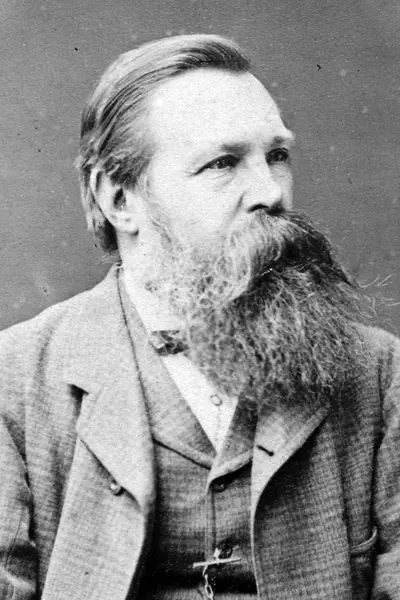
Friedrich Engels (/ˈɛŋ(ɡ)əlz/ ENG-(g)əlz, German: [ˈfʁiːdʁɪç ˈʔɛŋl̩s]), sometimes anglicised as Frederick Engels, was a German philosopher, economist, historian, political theorist and revolutionary socialist. He was also a businessman, journalist and political activist, whose father was an owner of large textile factories in Salford (Lancashire, England) and Barmen, Prussia (now Wuppertal, Germany).
