Alice Morse Earle Quotes
The brank, or scold's bridle, was unknown in America in its English shape: though from colonial records we learn that scolding women were far too plentiful, and were gagged for that annoying and irritating habit.
Earle, Alice Morse. Curious Punishments of Bygone Days. Herbert S. Stone & Company, 1896, p. 44.

That is easy for the man to do. At the time, this Indian view was little different than that prevailing amongst religious Christian whites.


Many leaders of nations are in denial about this problem which exists almost everywhere. In Israel, the problem is compounded because the very orthodox Jews and Muslims both come from a tradition where women are allocated a place subservient to men in many ways and to some (like some Christians) there is a perceived duty to discipline wives and daughters. So reform involves religious tradition and theology.


Although English, Cobett spent time in America and published a newspaper, The Porcupine Gazette, in Philadelphia. We was very conservative and even proposed legally enslaving the lazy poor. One of the reasons that he spent time in America was that he thought that England had become hopelessy democratic but thought there might be hope for America. Cobbett and his paper represented the extreme right wing fringe of the then Federalist Party. His Porcupine Gazette had a paying readership of 3,200, the largest circulation of any American daily newspaper.


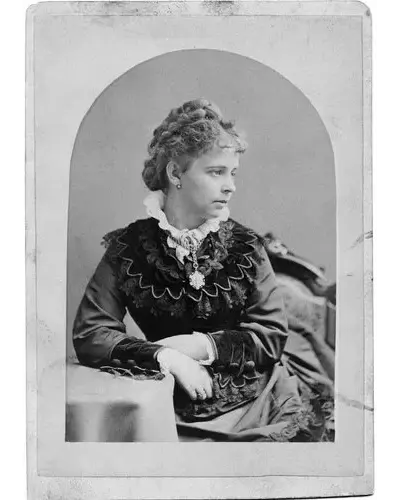
Alice Morse Earle was an American historian and author from Worcester, Massachusetts. She was christened Mary Alice by her parents Edwin Morse and Abby Mason Clary. On 15 April 1874, she married Henry Earle of New York City, changing her name from Mary Alice Morse to Alice Morse Earle. Her writings, beginning in 1890, focused on small sociological details rather than grand details, and thus are invaluable for modern social historians. She wrote a number of books on colonial America (and especially the New England region) such as Curious Punishments of Bygone Days.
