Martin Ryle Quotes
The benefits of medical research are real - but so are the potential horrors of genetic engineering and embryo manipulation. We devise heart transplants, but do little for the 15 million who die annually of malnutrition and related diseases. Our cleverness has grown prodigiously - but not our wisdom.
Ryle, Martin. Towards the Nuclear Holocaust. Menard Press, 1981.


Stem cells are cells of the body that transform into all other cells as needed. Embryonic stem cells are the ones most easily transformed to create other needed cells. There was and is a large supply of embryonic stem cells but religious abortion opponents were concerned that if there were enough success there would be a market for fetal stem cells which would encourage some women to have abortions so that they could sell the embryonic stem cells. President Bush, to placate his religious right wing, had banned federal funds being used for fetal stem cell research. President Obama, who had campaigned on this issue and been elected, then overturned the ban with this quote.

At the time there were some religious extremists who interfered with important research as they did not believe that man should try and do what before only God could do. In modern times the religious interference in scientific research has tended to be about research involving contraception, abortion or embryonic stem cell research. The most dangerous by the 21st century were the PETA and other “animal rights” terrorist groups who not only physically sabotaged some scientific research but harmed people and endangered human life in the process. Note that Dewey placed the moral burden on society to enable scientific research, not just to resist special interests opposing science.

This was written over 2 decades before Dolly the sheep was first cloned. Since his call for a societal public discussion about cloning, there has been very little, but by the 21st century there had been just a few hasty, ill-informed, almost hysterical efforts to legislate on the subject.


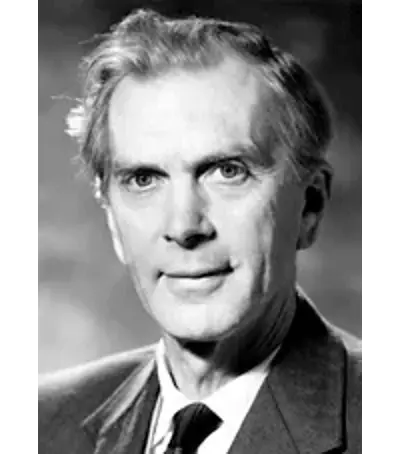
Sir Martin Ryle FRS was an English radio astronomer who developed revolutionary radio telescope systems (see e.g. aperture synthesis) and used them for accurate location and imaging of weak radio sources. In 1946 Ryle and Derek Vonberg were the first people to publish interferometric astronomical measurements at radio wavelengths. With improved equipment, Ryle observed the most distant known galaxies in the universe at that time. He was the first Professor of Radio Astronomy at the University of Cambridge, and founding director of the Mullard Radio Astronomy Observatory. He was the twelfth Astronomer Royal from 1972 to 1982. Ryle and Antony Hewish shared the Nobel Prize for Physics in 1974, the first Nobel prize awarded in recognition of astronomical research. In the 1970s, Ryle turned the greater part of his attention from astronomy to social and political issues which he considered to be more urgent.
