Joseph Stiglitz Quotes
The basic thing that made Trump popular is that he blamed others for the problems that we have in the United States. We have a problem. Let's face it. The typical income, median income, of a full-time male worker - and the workers who have a full-time job are the lucky ones - is at the same level it was 42 years ago. At the bottom, real wages in the United States are at the same level they were 60 years ago.
Stiglitz, Joseph E. People, Power, and Profits: Progressive Capitalism for an Age of Discontent. W. W. Norton & Company, 2019.


The last 5 years of the 1990s were the last of the Clinton administration where he was the principle architect of economic policies for that period. While this statement was somewhat self serving, the economic and fiscal performance of the Clinton years were astoundingly superior to those before and after.


Under the economic stewardship of the George W. Bush administration, the rate of inflation was modest. However, while the wages of the highest executives had increase markedly, the wages of average workers actually had decreased for much of the administration.

By the second year of the George W. Bush administration the huge budgetary surplus built under the Clinton/Gore administration had evaporated.
The reason the age rave grows faster than the median is that there are some earners at the top who increase by huge amounts while the rest of the population did not grow by much. This is the same phenomenon in England that occurred in the United States in the same period, only the United States differential was even greater.

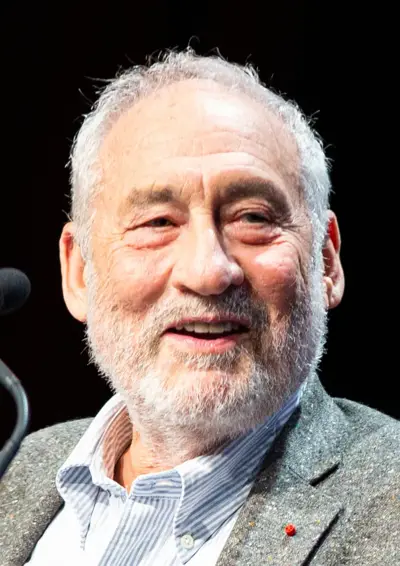
Joseph Eugene Stiglitz is an American economist, public policy analyst, and a professor at Columbia University. He is a recipient of the Nobel Memorial Prize in Economic Sciences (2001) and the John Bates Clark Medal (1979). He is a former senior vice president and chief economist of the World Bank and is a former member and chairman of the (US president's) Council of Economic Advisers. He is known for his support of Georgist public finance theory and for his critical view of the management of globalization, of laissez-faire economists (whom he calls "free-market fundamentalists"), and of international institutions such as the International Monetary Fund and the World Bank.
