Maria Ressa Quotes
The attacks against me and Rappler began appearing on Facebook in the summer of 2016. A year later President Rodrigo Duterte was repeating them in his State of the Nation address.
Ressa, Maria. How to Stand Up to a Dictator: The Fight for Our Future. Harper, 2022.


She was commenting on a suggestion that a Twitter User had made that any individual who felt he/she was being harassed by insulting Twitter messages, could have Twitter delete the offending content. Some of the Twitter campaigns against an individual has been gross, indecent, cruel and for the most part untrue. Hence the request. The person who perceived that he/she was being harassed was free to bring a lawsuit against the sender for defamation if the material is untrue and the person is not a Public Figure. The latter have no general right of redress in the courts.


See {583400} for the other side of the argument." Oversees and sets policy for the Voice of America


This set of guidelines not only denies the media freedom of expression but requires them to protect Saudi’s from information or views that might divert them from Islam. The media must by law protect the establishment of a particular religion.

In 1948 in the midst of the Red Scare the HUAC and its Senate counterpart had started to hound a former Assistant Secretary of State, Lawrence Duggan. Typical of the times, those who disagreed with Duggan’s political views anonymously leaked material to the press alleging that Duggan might have been a spy. The press had a feeding frenzy and Dugan committed suicide in the midst of the pressure. Most in Congress paused to contemplate the consequence of what was occurring. Even Richard M. Nixon regretted the “misunderstandings.” Dugan’s father, however, an old acquaintance of Edward R. Murrow, the then dean of American broadcasters, however primarily blamed the press for printing all the unsubstantiated rumor and innuendo.


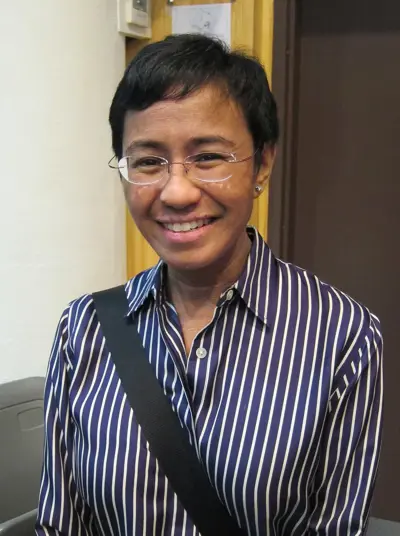
Maria Angelita Ressa is a Filipino-American journalist and author, the co-founder and CEO of Rappler. She previously spent nearly two decades working as a lead investigative reporter in Southeast Asia for CNN. In 2020, she was convicted of cyberlibel under the controversial Philippine Anti-Cybercrime law, a move condemned by human rights groups and journalists as an attack on press freedom.
