David Souter Quotes
The applicability of the Establishment Clause to public funding of benefits to religious schools was settled in Everson v. Board of Ed. of Ewing, which inaugurated the modern era of establishment doctrine.
Souter, David. Dissenting opinion. Zelman v. Simmons-Harris, 536 U.S. 639, Supreme Court of the United States, 27 June 2002, p. 687.

Madison, while a member of the House, had opposed the appropriation of funds for Congressional Chaplains and lost. Strict constructionists often quote his statements regarding Congressional Chaplains. Loose constructionists point to the fact that a majority of the Congress indeed appropriated the funds.


Carter was personally one of the most religious of our Presidents.


This is one of the key documents showing the “wall of separation of church and state” was in use in early America. Almost 200 years later the Chief Justice of the Supreme Court seemed ignorant of this communications. See William Rehnquist: {373663}

This is a critical quotation on the government establishment of religion issue. There are a few people who have argued over the years that the Founding Fathers and their culture was religious and where they were careful to avoid favoring one religion over another, they did NOT intend to put atheism on the same equal plane as religion as far as government action is concerned. However, some of the Founding Fathers were atheists, and some others like John Adams were deists—they believed in a God but not in the Trinity or in Judaism or any organized religion. So this quotation makes it clear that the First Amendment does NOT favor religion over non religion or secularism. Atheism must be on an equal footing but not on a higher plane.


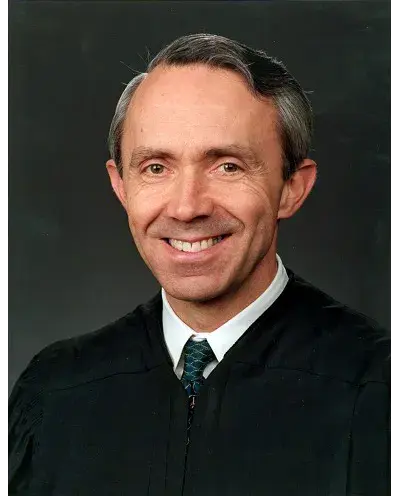
David Hackett Souter is a retired Associate Justice of the Supreme Court of the United States. He served from October 1990 to his retirement in June 2009. Appointed by US President George H. W. Bush to fill the seat that had been vacated by William J. Brennan Jr., Souter sat on both the Rehnquist and the Roberts Courts.
