John Jay Quotes
The Americans are the first people whom heaven has favored with an opportunity of deliberating upon and choosing forms of government under which they should live.
John Jay, 1745-1829, President of the Continental Congress, Governor of New York (Federalist), U.S. Foreign Secretary, First Chief Justice of the U. S. Supreme Court, Charge to the Grand Jury of Ulster County, NY, 1777
Sourced by: Eigen's Political and Historical Quotations

Garfield reminded Americans of how radical and unusual the concept of democracy had been at the time of the adoption of The Constitution, and that the American Revolution was one of ideas as well as armies.

While this has been one of the great American principles of political philosophy, in reality we have on many occasions interfered when a people chose an enemy of the United States or made a choice of a government which would seize power and not allow any further free choices. However, from the time JFK made this statement to today, our foreign policy record has become much better on implementing this principle.


This was the first contact between the colonists and the French government. The French agent was very non committal and the parties were just feeling each other out. Franklin made it perfectly clear that the colonists would not trade the English King for a French one and become part of the French empire.


Darius argued for a monarchy and became king. . See {611015}


Lieber is best known because he was assigned by President Lincoln to study the then international laws of war and prepare a manual for the guidance of union troops in the Civil War. Lincoln then issued the document as a general order.


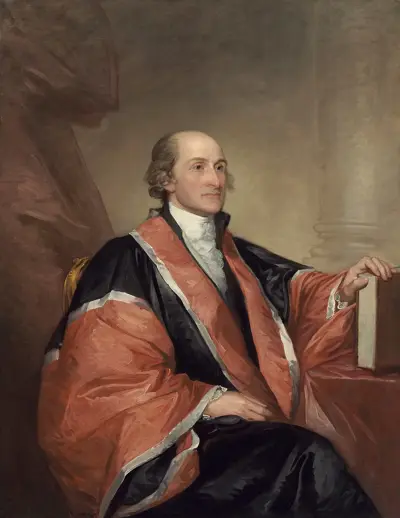
John Jay was an American statesman, patriot, diplomat, Founding Father, abolitionist, negotiator, and signatory of the Treaty of Paris of 1783. He served as the second Governor of New York and the first Chief Justice of the United States (1789–1795). He directed U.S. foreign policy for much of the 1780s and was an important leader of the Federalist Party after the ratification of the United States Constitution in 1788.
