Ida B. Wells Quotes
The alleged menace of universal suffrage having been avoided by the absolute suppression of the negro vote, the spirit of mob murder should have been satisfied and the butchery of negroes should have ceased.
Wells, Ida B. A Red Record: Tabulated Statistics and Alleged Causes of Lynching in the United States. Donohue & Henneberry, 1895, p. 11.


Incredible as it seems today, no Black person had ever dined in the White House as a guest of the President. African American servants were common. And Abraham Lincoln had received many Black visitors as had Presidents after him. But no president had ever had a Black person to dine as a social equal. The photo, reproduced here, illustrates the parity. But that was the worst thing a President could do so far as Tillman and his fellow racists were concerned. They had, since the end of the Civil war, used violence and terrorism to murder, maim and/or intimidate the Negro population to remain in an economic and socially inferior position. In Tillman’s state over these decades they had more lynchings than legal executions and there were plenty of them. Newspapers over the South riled up the whites and there was a wave of terror to be sure that the President’s importune action would not be taken as an endorsement of the Negro’s right to any equality or even dignity. This dinner essentially wedded all the Blacks to the Republican Party and all the Southern Whites to the Democratic Party. This would remain the political situation for over 60 years until the Democrats passed the LBJ Civil Rights Act in 1964 and the Republicans decided to solicit the Southern White racists who accepted the invitation and within a few years, there was a complete reversal of party loyalty of most Blacks and most Southern White Racists.


In 1911 the citizens of Honea Path, SC, led by Joshua W. Ashleigh, the State Legislator representing the district and his son, the editor of the local newspaper, dismembered and lynched a Black man, Willis Jackson. Some South Carolinians were distressed and asked the Governor to initiate and investigation. See his later statement on lynching in 1930.


Named after penal reformer Johne Howard, 1726-1790. Howard Associations have since been organized in many countries.


Instead of standing and saluting as professional athletes have done for decades before games, he kneeled and refused to stand. This caused great public criticism but also some initial support. He was potentially risking his multimillion dollar salary as this technically violated his contract to avoid anything embarrassing to the team. He also donated $1 million to programs in the area that were working to enhance Black/white understanding. Even those who disagreed with his choice of protest defended his right to do so, and after the initial furor, public opinion, while not in agreement about his method, tended to support him for having the courage of his convictions and using his celebrity for a worthy cause. After sensing the public opinion, his team matches his $1 donation. Professional athletes both in the NFL and in other sports then began to do the same as a form of protest for the large, disproportionate, number of black men who were killed, mostly when unarmed, by police. The reference to the “paid leave” was the practice followed by most police departments—usually required by collective bargaining agreements with police unions—of placing police officers accused of committing violations of laws or regulations on paid administrative leave while all the investigations, hearings, and other processes . While this practice protected the rights of those police officers who were not guilty, it ended up paying brutal murders for a some time entire their case was decided or acted upon be the district attorney.

This is one of many instances where Black leaders advocated armed self-defense. In the early 20th century, this worried whites who often accused these blacks of advocating violence against whites. It also made non-violent, anti-gun, blacks, like Booker T. Washington, more popular.

to the Civil Rights demonstrators Hoover, an inveterate racist himself would not allow FBI agents to protect Civil Rights demonstrators (see {637634}) until he was ordered to by the Attorney General.


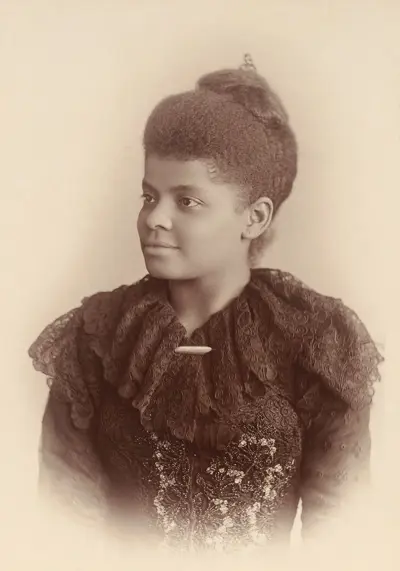
Ida Bell Wells-Barnett was an American investigative journalist, educator, and early leader in the civil rights movement. She was one of the founders of the National Association for the Advancement of Colored People (NAACP). Over the course of a lifetime dedicated to combating prejudice and violence, and the fight for African-American equality, especially that of women, Wells arguably became the most famous Black woman in America.
