Barry Commoner Quotes
The AEC scientists were so narrowly focused on arming the United States for nuclear war that they failed to perceive facts - even widely known ones - that were outside their limited field of vision.
Commoner, Barry. Science and Survival. New York: Viking Press, 1966.


See {624449} for the essence of the letter.


This quotation is very important in helping to understand the 1950s in America with respect to nuclear weapons policy. McCormick was one the better educated, sophisticated, and influential Americans. Yet he appears to be a technological and nuclear ignoramous. Most people had not yet realized that atomic weapons were not just much larger traditional bombs. They could do terrible damage, but it would always be localized they thought. Chicago might be destroyed but the people out of range would be OK. He never got it that a dirty bomb could be dropped on Detroit and depending on which way the wind is blowing could wipe out Chicago and much of the Midwest as well. He knew nothing of the genetic effect the radiation, nor the implications for the environment of maintaining a large nuclear manufacturing industry. He and many like him did not realize that after the first bombs were created, how easy it would be for the Russians and others to also develop a nuclear arsenal. And 50,000 warheads was just a matter of effort. The implications of these things would inhibit our carrying out his and others ideological views of foreign policy. Oppenheimer and most nuclear scientists explained all this, but believing them and acting on those beliefs would have been too much of a change.


Canada had the same absurd civil defense propaganda in the Cold War as the U. S. did. Both governments wanted to persuade their publics that a nuclear attack was survivable.


Writing about the threat of nuclear war…
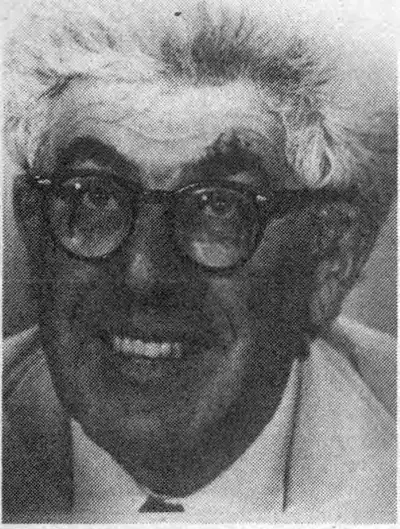
Barry Commoner was an American cellular biologist, college professor, and politician. He was a leading ecologist and among the founders of the modern environmental movement. He was the director of the Center for Biology of Natural Systems and its Critical Genetics Project. He ran as the Citizens Party candidate in the 1980 U.S. presidential election. His work studying the radioactive fallout from nuclear weapons testing led to the Nuclear Test Ban Treaty of 1963.
