Muhammad Ali Jinnah Quotes
That freedom can never be attained by a nation without suffering and sacrifice has been amply borne out by the recent tragic happenings in this subcontinent.
Jinnah, Muhammad Ali. Quaid-i-Azam Mohammad Ali Jinnah: Speeches and Statements as Governor-General of Pakistan, 1947-1948. Government of Pakistan, Ministry of Information and Broadcasting, 1989, p. 82.


Churchill was reported to be so angry and exasperated that his face turned red and he was sputtering. During World War II, Gandhi, Nehru and other Indian Nationalists were leading protests against British control of India. This not only bogged down British soldiers surprising the nationalists rather than fighting in Burma or in other war theaters, but India supplied a huge number of battalions to the British Army the world over and if that manpower dried up, the allied war effort would suffer. The American State Department wanted Churchill to announce that after Japan was defeated, there would be a process toward self-government. This way, they thought, the Indians would redouble their effort to defeat the Japanese and stop the then current protests and strikes. Churchill was strongly opposed to any diminution of the British Empire, but beyond that, he knew India quite well and realized that at any hint of Independence the large Muslim minority in India would insist on autonomy or a partition of the country and use sectarian violence and terror to intimidate the Indian Congress party and the British, but the major victims of the terror—the Hindus and the Sikhs would not remain passive, but would retaliate in kind. President Roosevelt was in the midst of planning the Normandy Landings of the D-Day invasion and did not want to pressure Churchill and the British at this point in time, so the door to independence was not opened during the war and Britain had to deal with the protests throughout. However, when, after the war, the Labor Government, started a process toward Indian independence which resulted in exactly what Churchill predicted. At least 2 million Indians were slaughtered in the internecine terrorist cycles of fear and retaliation motivated terror attacks what were so extensive that the British military could not really control it.

In the negotiations the Indian nationalists of the Congress Party did not get everything that they wanted. Rarely does anyone in legitimate negotiations. This was a masterful example of oratory where Nehru wanted to produce the euphoria and historical gravitas that was appropriate when the largest group of people in world history gained self-government and independence. Yet the Congress Party had made promises in the platforms over the years that had not been kept. The partition of the one nation into a Muslim state as well as India denied the Indians of some of their historically and economically most important territories and he had to acknowledge that failure without dampening the public enthusiasm for the great achievement. This was a masterpiece.

In one of the most unusual revolutions in world history, Brazil became independent from Portugal via a revolution led by the son of the Portuguese King and heir to the throne, Pedro I. The crown prince of Portugal, led Brazil in her breakaway from Portugal and by popular acclaim became Pedro I, Emperor of Brazil. He is probably the only monarch in history who was the heredity monarch of one kingdom and selected by popular acclaim to the throne of another.

Turkey under the Ottomans had been an imperialist, expansionist, empire, fighting and ruling over half of Europe and all of the Middle East. Ataturk argued that fighting and taking casualties should only take place to protect the nation’s independence and not to build or maintain an empire.


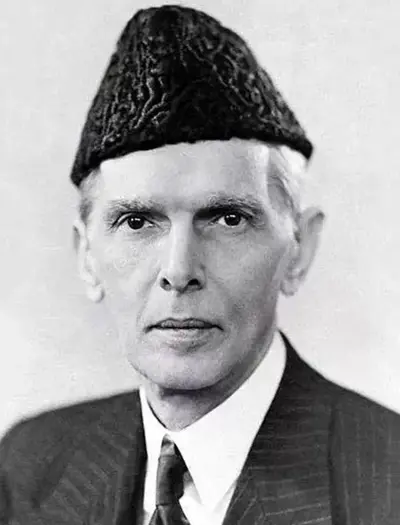
Muhammad Ali Jinnah was a barrister, politician and the founder of Pakistan. Jinnah served as the leader of the All-India Muslim League from 1913 until the inception of Pakistan on 14 August 1947, and then as the Dominion of Pakistan's first Governor-General until his death. He is revered in Pakistan as the Quaid-i-Azam ("Great Leader") and Baba-i-Qaum ("Father of the Nation"). His birthday is observed as a national holiday in Pakistan.
