William Gannaway Brownlow Quotes
That dead dog in the White House.
Referring to President Andrew Johnson:
William Gannaway Brownlow, 1805-1877, [Parson Brownlow], Tennessee Governor, U. S. Senator (Whig, TN), Communication to Congress, Quoted in Bowers, The Tragic Era, 1929
Sourced by: Eigen's Political and Historical Quotations


The Russian leadership thought little of it and assumed that it had no consequences. An American Communist official in the Kremlin, Morris Childs, told them that Nixon might actually lose his job over Watergate. Childs was actually an FBI spy. See his quote.


In an ironic turn of the tables, Frank Kingdon, a staunch Roosevelt supporter wrote a book defending the President and used the phrase as a title, mocking the upper class hatred of FDR.


Clinton later admitted to fallatio, claimed he was referring to sexual intercourse, and apologized for misleading the American people.


First Lady Lou Henry Hoover, 1874-1944, invited Jessie DePriest the Black wife of a Congressman to tea at the White House. No Black woman had ever been there socially before. This was a typical Southern reaction. The Texas State legislature actually passed a resolution chastising the First Lady—the only such action in American history.


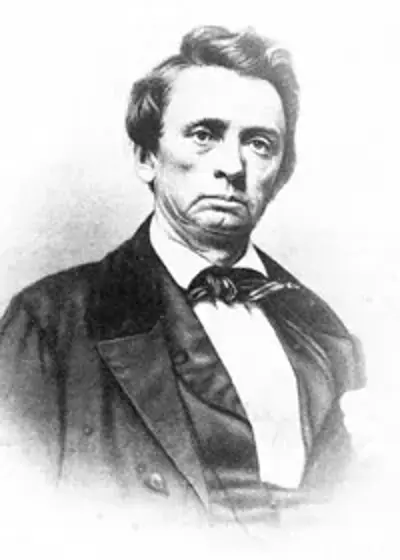
William Gannaway "Parson" Brownlow was an American newspaper publisher, Methodist minister, book author, prisoner of war, lecturer, and politician. He served as Governor of Tennessee from 1865 to 1869 and as a United States Senator from Tennessee from 1869 to 1875. Brownlow rose to prominence in the late 1830s and early 1840s as editor of the Whig, a polemical newspaper in East Tennessee that promoted Whig Party ideals and opposed secession in the years leading up to the American Civil War. Brownlow's uncompromising and radical viewpoints made him one of the most divisive figures in Tennessee political history and one of the most controversial Reconstruction Era politicians of the United States.
