Gail Collins Quotes
Texas has no income tax, which is a big draw for corporate executives who do business there. But it's hardly tax-free. The property taxes are high for a Southern state. The sales taxes are high. One study found that the bottom 20 percent of the Texas population pays 12 percent of its income in state and local taxes.
Collins, Gail. As Texas Goes...: How the Lone Star State Hijacked the American Agenda. Basic Books, 2012.

This Supreme Court opinion nullified the attempt to have a Federal Income Tax. The constitution allowed the Federal Government to collect import duties and that was essentially the only revenue source for the national government for over a century. If free trade were an objective, then customs duties would be lowered or eliminated and the Federal Govern lost the revenue. The only kind of direct tax that was allowed was a head tax in which every American paid the same tax. This was not a “flat tax” which means a tax where each person pays the same PERCENTAGE of income as tax. This meant that the richest person in the nation could only pay what the poorest could afford and therefore was impractical. It would take a constitutional amendment 18 years later—the 16th Amendment—to make the income tax legal. Many extremist anti-Federal government have refused to pay their income taxes and they argue that “The Supreme Court has declared the Income Tax illegal.” While that is so, after the 16th Amendment, the Court agreed that it was now constitutional. So the implication of unconstitutionality of the Federal Income Tax that the anti-tax forces have used was the law but has not been so since 1913. After that, it was and is perfectly legal and constitutional.

From the earliest days of the nation a very few people have left the country for reasons which range from seeking more economic freedom (less or no taxes or regulation) or personal liberty (being drafted for a war to which they disapproved and didn’t want to fight in or escaping government invading their privacy). However, while there are countries which on one or two issues may be to some people’s thinking better than the United States, a tiny few have left America while millions pour in—legally and illegally—to have what the overwhelming number of people in the world is one of the greatest places to live in the history of the world. See Cambell’s counter to Norquist: {634644}.


The nation rejected the flat tax that was favored by conservatives in the 1930s. However, in the Republican Presidential Primary Campaign of 2000, candidate Steve Forbes made the flat tax a centerpoint of his campaign. He lost badly, but the idea caught on amongst some conservative Republicans, and has had some support since.


An income tax had been instituted during the Civil War but had lapsed. Existing taxes were therefore all excise or head taxes—very regressive. Some politicians began floating the idea of bringing back the Income Tax. But the New York Congressmen objected on the grounds that New York would pay a much higher proportion of the taxes, then their population represented. Under the Civil War, income tax, New York State had paid one/third of the entire national tax burden.

This became known as the Buffet Principle—that the very rich should not pay a lower tax rate than the workers who make far less money than they do. President Barack Obama used this principle by name in calling for the 2011 Jobs Act which would eliminate some of the loopholes and exemptions by which the rich could avoid some or much or their tax obligation.

This early cry for a graduated income tax interestingly coupled it with a reduction of corporate taxes. The former became a major plank of the Democratic Party, and the latter of the Republicans. In America, third minor parties, even though they do not win elections sometimes do influence the political scene by putting ideas on the national agenda.


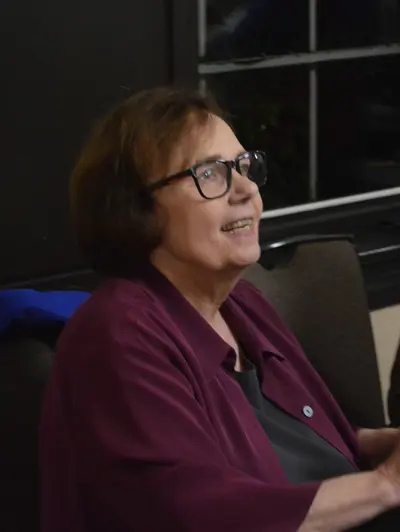
Gail Collins is an American journalist, op-ed columnist and author, most recognized for her work with The New York Times. Joining the Times in 1995 as a member of the editorial board, she served as the paper's Editorial Page Editor from 2001 to 2007 and was the first woman to attain that position.
