Zachary Taylor Quotes
Tell him to go to Hell!
Zachary Taylor, 1784-1850, 12th President of the United States (Whig, KY), Response to the demand for surrender by Mexican General Santa Anna at the Battle of Buena Vista
Sourced by: Eigen's Political and Historical Quotations


After being surrounded by the Germans for seven days at what would later be called the Battle of the Bulge, a German officer notified the Americans that they would accept their surrender. McAuliffe’s one word response summed up the resolve of the Americans who were surrounded. The Americans managed to hold the line and defeat the German’s last major offensive of World War II.

There were times when the President and cabinet members almost came to blows. In 1824 the Secretary was furious with President Monroe about some customs appointments. He raised his can saying:. The president, not to be outdone picked up a fire poker and hurled some unknown epithet back at Crawford. Apologies were given after this stand-off.


Bush followed a tradition of American opposition to conquest. See Henry L. Stimson’s statement on the Japanese invasion of Manchuria.

Referring to John Foster Dulles:

In one of the most famous rebuffs of a politician to his constituents, the congressman sent the following message home to his constituents after receiving instructions from them which he did not care for. He went to Texas where he died defending the Alamo.

Responding to reporters who asked him if he was going to bolt the Socialist Party:

In the wake of the Tonkin Gulf incident, the United States bombed and destroyed North Vietnam naval installations:

TR was then a Lieutenant Colonel and the regiment he organized was an unusual combination of Ivy League College men, cowboys from the West, and Black Buffalo Soldiers.


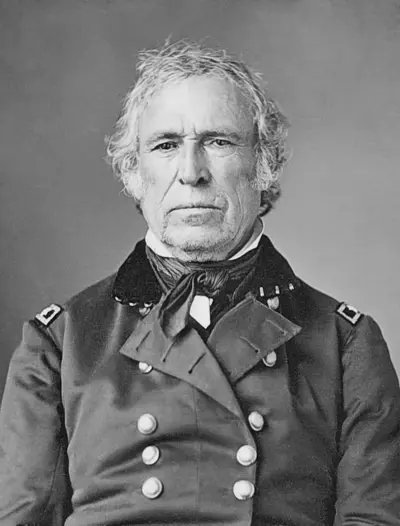
Zachary Taylor was an American military leader who served as the 12th president of the United States from 1849 until his death in 1850. Taylor previously was a career officer in the United States Army, rose to the rank of major general and became a national hero as a result of his victories in the Mexican–American War. As a result, he won election to the White House despite his vague political beliefs. His top priority as president was preserving the Union. He died sixteen months into his term, having made no progress on the most divisive issue in Congress, slavery.
