Neil Postman Quotes
...technological competition ignites total war, which means it is not possible to contain the effects of a new technology to a limited sphere of human activity...
Neil Postman, Author and Cultural Critic, Technopoly: The Surrender of Culture to Technology, 1992
Sourced by: Eigen's Political and Historical Quotations

The nation was in the midst of a long debate over whether or not new bio-technology was appropriate and desirable for use and there were various efforts to legally curtail their application. These included cloning, stem cell research, radiated foods, fish farming, hydroponic agriculture, hybrid development and cross species organ replacement.


For a similar view from the eyes of an American, see Pearson {612242}.


While the President had total faith in American scientists, at the time the state of American physics was not world class in several key areas. Oppenheimer, was for example, the ONLY senior American theoretical physicist at the outbreak of the war, and he had been trained in Germany. What the President did not quite realize was how many of the key scientific positions on the Manhattan Project were foreign refugees who had fled the Nazis in Europe. Many American scientists and engineers did not want to go to Los Alamos where they could not leave for the duration of the war, had to give up their own personal research, and whose relatives who did not accompany them would never know where they were or what they were doing. But there were enough great American scientists who Oppenheimer recruited that combined with the Europeans formed the greatest and most effective concentration of scientific manpower working in history.

He made this quotation in a discussion about nuclear weapons, but the principle is valid for many areas from the Internet to pharmaceuticals. In the nuclear weapons case there have been a number of accidents – including fatal ones – over the years and on several occasions a nuclear weapon came close to detonating near populated areas. In one case, radiation damage from a crash of a nuclear weapons equipped bomber have made an area in Spain unusable for years into the future.


Most environmentalists limit the vision of their solutions to using less of our precious natural resources which is very important but just as important and perhaps more so in the long run is increasing the supply of these resources. Food is an example. The major reason that there is no serious food shortage world-wide is that we have increased the productivity of agriculture requiring less labor, less water, less fertilizer, less land, and less dependency on weather. Distribution has also improved, but there is no very good way of distributing something for which there is a great shortage.
See {626813} for another quotation on this point.


Not only did the Radio fail to inhibit war, but Marconi completely missed the way demagogues like Hitler and Mussolini would use propaganda via the radio to induce war in their societies. They did not justify war; they made it a national duty. Media inventors seem to have an overly optimistic view of the invention’s effect. See {635261}.
This quotation is important for a politician or policy maker to understand. Many of the most useful technologies for mankind, were never developed for that purpose at all. In many cases, the major motivation is just understanding how a phenomenon functions, in others it just seemed like a scientific next step. In this case, Marconi was quote surprised that this new concept of radio would have much practicality.

See Eigen {633625} for a more explicit personal statement of the choice for the individual.

The Scientific Project that developed the Atomic Bomb. The focus of the scientists had been to beat the German’s who were terribly evil might develop a bomb first. After the defeat of some scientists began to have concerns about their purpose. Most were very distrustful of the army and believed little of what they were told, by the military at Los Alamos. However, in a remarkable our de force of leadership, Oppenheimer had the trust of virtually all of the staff. This memo and a briefing of the invasion plans of mainland Japan (see {629858} ) convinced the scientist to maintain their intense and punishing pace.

Bryan participated as a prosecutor in the infamous Scopes Trial in Tennessee where a school teacher was convicted of a crime for discussing the idea of evolution in a high school classroom. He had written this for his summary to the jury, but the summaries were dispensed with when it was obvious that Scopes would be convicted. He had admitted to breaking the law, but the law itself was on trial.
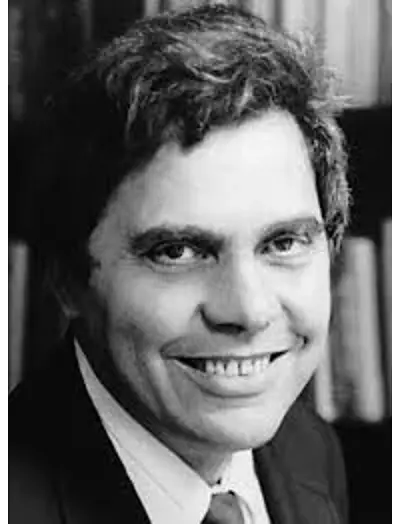
Neil Postman was an American author, educator, media theorist and cultural critic, who eschewed technology, including personal computers in school and cruise control in cars, and is best known for twenty books regarding technology and education, including Amusing Ourselves to Death (1985), Conscientious Objections (1988), Technopoly: The Surrender of Culture to Technology (1992), The Disappearance of Childhood (1994), and The End of Education: Redefining the Value of School (1995).
