Jim Cooper Quotes
Take the veto. Bush is the first president since James Garfield in 1881 not to veto a single bill. Garfield only had six months in office; Bush has had over four years.
United States, Congress, House. Representative Jim Cooper speaking on Presidential Vetoes. Congressional Record, Government Printing Office, 2005.


Alberto Gonzalez, White House Counsel and later Attorney General who was forced to resign and David S. Addington, Counsel to the Vice President, had come up with a novel view of the powers of the presidency. They argued that since the President is the Commander in Chief, in a war situation or intelligence gathering thereto, has the Constitutional responsibility for that function, he need not obey any laws of Congress as in the conduct of the war Congress would be impinging on the Constitutional separation of powers which itself was prohibited by the Constitution. The argument did not find any significant legal support but for a while the George W. Bush White House behaved as if this were the law, despite the fact that even in the American Revolution and the War of 1812 Congress passed laws regulating the conduct of the armed forces as is provided for in other parts of the Constitution. Yet even Goldsmith would allow the President some powers that many think are unconstitutional and/or belong to Congress. See {32436}.

Hamilton thought that the Executive Branch should be co-equal with the Judicial Branch and lifetime tenure should apply to both. This quotation is very important as we consider developing countries and emerging democracies. Some in the third world have Presidents for Life—a concept that most democracies scoff at. But the stability and the independence was important enough to some of the Founding Fathers was actually advocated and considered as we formed the American Democracy.


President George W. Bush had ignored a federal law and tapped the phones of Americans without probable cause and a warrant issued by a court. The President’s defenders argued that the President, as Commander in Chief, has the Constitutional responsibility to lead the military and protect the nation. Intelligence gathering is part of military activity. Therefore the intelligence gathering is a Constitutional duty and the Congress, under the separation of powers doctrine, may not interfere with the President’s Constitutional Duty to conduct intelligence. Under this doctrine, the President need not obey laws that he believes impinge on his management of the war effort and the defense of the nation. Most legal scholars believe that this argument is nonsense, but the George W. Bush administration has stated the doctrine and it was the subject of much litigation.

The naval hero was approached as to his reception to a presidential draft. His famous response eliminated most interest in him. If Congress selected the President, he may well have won.

When the Senate was debating the Gulf of Tonkin Resolution, which would empower the President to take "all necessary measures" to repel any armed attack on U. S. forces, Senator Morse was one of only two Senators opposing the resolution:


This quotation perhaps was the most critical in Roosevelt’s political career. After winning the presidential election in his own right, that evening at a press conference he called, he not only committed to serving only two terms—then a custom and not law as it would be after WWII—but he also committed that his first three and a half years where he was not elected but assumed the presidency upon McKinley’s assassination would count as a full elected term. He therefore in 1908 could not run again even though the public wanted him to, and he might have liked another term. More important historically was 1912. Roosevelt had chosen his close friend and colleague William Howard Taft to succeed him and with Roosevelt’s support he was elected in 1908. But Taft’s wife who had always been his closest political advisor and reviewer of all his policies and speeches, had a stroke shortly after Taft was elected. Taft’s performance as President was very disappointing to Roosevelt, and he ran against Taft in the 1912 Republican nominating campaign. The very conservative Republicans were against Roosevelt, but many of those who liked him were distressed that he was reneging on his pledge not to run for a 3rd term. Roosevelt lost, and famously started the Bull Moose Party and ran against Taft and Wilson. He outpolled Taft but with the split Republican vote, Woodrow Wilson won the Presidency. This pledge haunted Roosevelt for the rest of his life.

America’s first political economist. This is a wonderful quotation which shows the compromises that even a great president like Abraham Lincoln had to act when Congress passed must have bills.


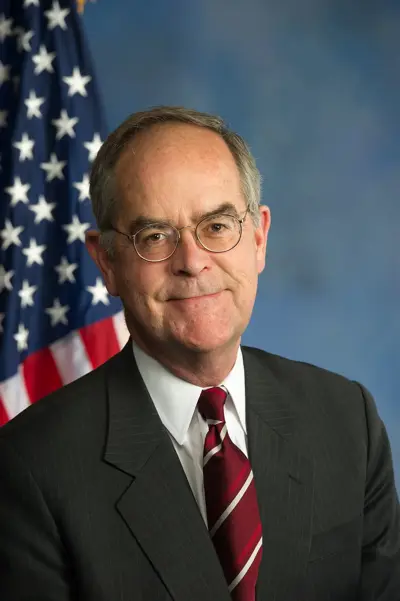
James Hayes Shofner Cooper is an American politician who has served since 2003 as the U.S. Representative for Tennessee's 5th congressional district (based in Nashville). He is a member of the Democratic Party and the Blue Dog Coalition, and represented Tennessee's 4th congressional district from 1983 to 1995. His district includes a large part of Nashville. He is dean of Tennessee's delegation to the House of Representatives.
