Peter Welch Quotes
Swipe fees have increased steadily since the introduction of debit cards 20 years ago, when there were no swipe fees at all. Merchants can't negotiate or control them. They've tried, but they have no leverage against the big banks and issuers. So they get ignored.
Welch, Peter. "Don't Delay Rules on Debit Swipe Fees." The Hill, 4 May 2011.


This is an interesting quotation because it shows that utilities and monopolies using their power and money to avoid effective pro consumer regulation is nothing new and was ongoing as soon as there were government granted monopolies that were supposed to be regulated.


Samuel Langhorne Clemens, 1835-1910. Bribery of Congress and other legislatures was very common at that time. In modern times, bribery has become less common, with the function being assumed by campaign contributions. Relative to the cost of living, these “prices” in the modern era are far greater than the bribery prices of the 19th Century.

This would seem a much easier solution to the problem of monopoly holders charging outrageous prices than trying to fix profits or lay a large tax on the profits. However, few governments ever do this. In many cases the patent holders control or heavily influence the government. There is in addition, in most Judeo-Christian societies an assumption that most people have a moral sense and will not take undue advantage of customers just because they have the power to do so. And in the most egregious cases of monopoly pricing there were many other patents where the inventors were not gouging the consumers. It is always been the minority of businesses that have taken gross advantage of patent monopolies. However at some periods, where there was an oligarchy, all the companies in an area abused their patent monopolies together. An example would be the pharmaceutical industry of the early 21st century.

She was the only major Federal Official who did not support the bailouts of the banks and their bondholders and shareholders. Not one of her insured bank depositors lost their insured funds in the financial crisis. She protected them all but would not protect the banks themselves. Other officials did that and the following year the bank executives took the bailout money and paid themselves and others in the bank huge bonuses when the banks lost billions.

At this time it was 6 years after the Home Financing Crisis and the Meltdown of 2008 and despite tens of thousands of law violations by the bank, the Justice Department was finally finishing their investigations and requiring some penalties. Other negotiations with other banks were in progress, but no bank executives were going to jail for the millions they handled fraudulently, whereas a burglar who stole household goods would do jail time.

The Dodd Frank bill was designed, in the aftermath of the large bank induced meltdown of 2008 and the Great Recession, to regulate the banking industry so that no bank would be “too big to fail”. However, although the bill placed many restrictions on the banks to prevent much of their risky economic behavior, which the banks complained inhibited their growth and profitability. However, the bill did not put any limits on the size of the large banks and their critical proportion of the U. S. Financial System. If a bank was large enough, the government did not dare allow the bank to fail regardless of how profligate the Bank had been with its depositors’ money. So the shareholders made big money from the Bank’s risky behavior if it turned out well, and if not the taxpayers had to bail the banks out, because they were too big to fail without causing much of the rest of the country to also fail. Warren and others wanted a simple solution. Break up the large banks into smaller ones and then if any one of the small units makes poor investments, the bank could fail and other than its shareholders and creditors, the effect would not be so serious that the government could not allow the bank to go into bankruptcy. Mismanaged banks could fail like other mismanaged companies and not take down much or the rest of the country with them. But the banks lobbied to prevent that, and by 2014, 6 years after the taxpayers had to bail out banks that were too big to fail, many of the banks were twice as large as they were when they were already too big to fail.
There were not many large companies in the agribusiness selling chemicals, fertilizers, pesticides and seeds to the farmers of America. When there was an attempted merger, the regulators were supposed to make sure that the merger press would not be responsible for higher prices as with the merger, there would be less competition. As Holcomb said in this quotation, the companies would typically tell the regulators how they merger would produce synergistic cost savings for the farm products. And in theory that wold be true in most cases. However once the company receives approval, the tend to claim the products are losing money and they must raise prices. And often that is true but the main reason for the loss is the cost of the money that they usually borrowed to pay for the acquisition.


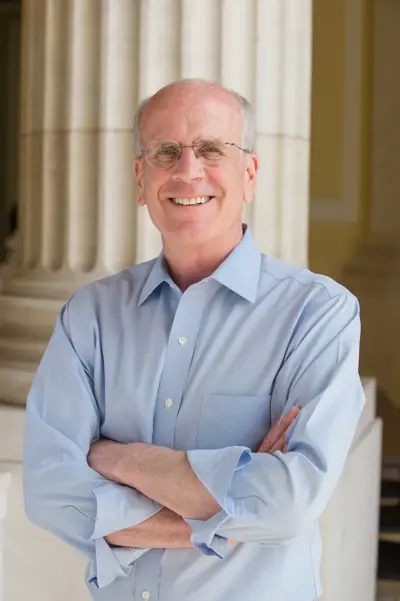
Peter Francis Welch is an American attorney and politician who has served as the U.S. Representative for Vermont's at-large congressional district since 2007. He is a member of the Democratic Party and has been a major figure in Vermont politics for over three decades.
