Brigham Young Quotes
Sustain the government of the nation wherever you are, and speak well of it, for this is right, and the government has a right to expect it of you, so long as that government sustains you in your civil and religious liberty, in those rights which inherently belong to every person born on the earth and if you are persecuted in your native land, and denied the privilege of worshipping the true God in spirit and in truth, flee to the land of Zion, to America—to the United States, where constitutional rights and freedoms are not surpassed by any nation—where God saw fit, in these last days, to renew the dispensation of salvation, by revelations from the heavens, and where all, by the constitution and laws of the land, when executed in righteousness, are protected in all the civil and religious freedom that man is capable of enjoying on earth
Young and the Mormons sent missionaries to many counties and made many converts. Since few countries provided a great deal of religious freedom, Young and other Mormons believed that God himself had created America with its freedom. Ironically, it was this advertising of America as a land of freedom that caused many Americans to discriminate against Mormons. The issue of Mormonism was conflated with a strong nativist and anti-immigrant sentiment that has existed among a part of the American population throughout its history. Many opposed the Mormons for the main reason that they were encouraging and in many cases aiding large numbers of immigrants to the United States.
Brigham Young, 1801-1877, Mormon Leader and Governor of Utah, Statement to Mormons outside of the United States, MFP 2:98
Sourced by: Eigen's Political and Historical Quotations

Federal officials and commissioners issued laws, directives and orders that were very unpopular with the Mormons who were in the overwhelming majority of the Utah territory. The Mormon “government” was a type of theocracy but a very popular one. The Mormons tried to test the constitutionality and legality of the Federal laws and orders before they would obey. The government position was that they should obey and then could test the laws in the courts. The Mormons eventually lost in the courts anyway, but the principle of obedience to law until it can be tested and reversed has generally been the rule of U. S. Law. However, civil disobedience in which many religions have engaged in our history argues the obverse. Eventually Taylor had to go “underground” and rule the church from exile in which state he died.

Smith and his converts were severely persecuted and the governments at the time (local, State, and Federal) would not uphold many of their rights and freedoms. Hence the observation. Smith had written to most of the then likely Presidential candidates of both major parties asking for their position on the Mormons who were facing persecution wherever they went. None of the politicians would make and satisfactory commitments. Smith took Direct Action and became the only major religious official to have run for the Presidency of the United States until Pat Robertson tried and failed in 2000. Smith’s assassination shortly thereafter cut his run for the Presidency short before it made much headway and politically he had no chance to affect the race.


“Celestial Marriage” is the term then used be Mormons to describe plural marriage.

John Witherspoon, a Presbyterian minister with evangelical sympathies, was one of the signers of the Declaration of Independence.


Although the Puritans were the first religious group of immigrants who came to America for religious freedom, once the obtained it, they were terribly despotic in trying to force others to adopt their religious views. By seeking religious freedom the planted the seeds of democracy. By denying it to others, they also planted the seed of the First Amendment. Those who insisted upon separation of church and state always cited the Puritans as example one of what can happen with an established church in America.
There was extensive persecution of Mormons with mobs denouncing them and attacking Mormon facilities and people often with the support of the government officials who were charged with protecting people and maintaining law and order.


Abdul Rahman, Afghan citizen, had converted from Islam to Christianity 16 years before. Conversion from Islam is a capital crime under Sharia Law which was the law of Afghanistan even after the Taliban had been overthrown. He was jailed and threatened with death. Statements like this and others made directly to the government persuaded the Afghan politicians to go against their mullahs who demanded the death penalty as is proscribed by Islamic Law—Sharia. The judges tried to get Rahman to recant and he would not (see {589518}). So they finally decided that he must be mentally insane and therefore could not be tried, and the problem was solved that way.


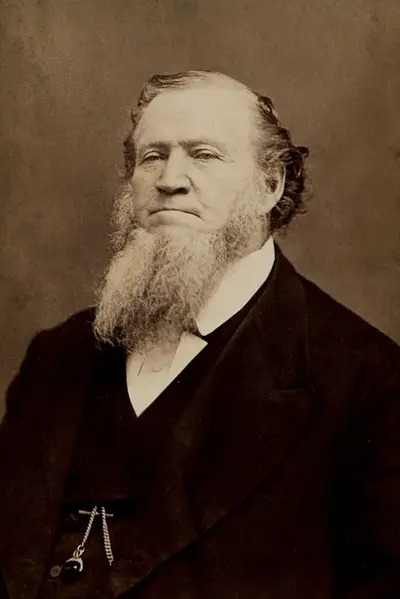
Brigham Young was an American religious leader, politician, and settler. He was the second president of The Church of Jesus Christ of Latter-day Saints (LDS Church) from 1847 until his death in 1877. He founded Salt Lake City and served as the first governor of the Utah Territory. Young also led the foundings of the precursors to the University of Utah and Brigham Young University.
