Saint Augustine Quotes
Suppress prostitution, and capricious lusts will overthrow society.
Saint Augustine, 354-430, Bishop of Hippo, Christian Church Father & Philosopher, Quoted in William W. Sanger, The History of Prostitution
Sourced by: Eigen's Political and Historical Quotations

The sexual exploitation of female slaves by the slave owner and/or his relatives was a phenomenon about which most Southerners were in denial. Light skinned and even white babies, born to Negro slaves was fairly common. The gross immorality was so great that it was too painful for most Southerners – especially white females to even contemplate much less discuss. At the same time, the abolitionists had to be very careful that to raise this problem as delicately as possible lest the lost their audience with such gross and indelicate behavior. This quotation was particularly artfully phrased.


See {642028} & {642029} for another quotation relating to this terrible abuse.


By 1900 20 percent of American Women were already working and an inexorable trend had begun.


He was referring to Sandra Fluke, a student at Georgetown University, a Catholic school whose health plans did not cover birth control pills. The Heath advisory committees had concluded that birth control pills were a critical element of women’s health. Congress was debating a rule that would exempt religions from having to provide birth control as a part of their health insurance if it was against their beliefs. However, universities, hospitals, museums and civil activities run by churches were not exempt, Ms Fluke testified before Congress that her birth control pills cost her much money out of pocket. Many conservatives throughout the country opposed the requirement, some on religious conscience grounds and others like Limbaugh who opposed because they opposed birth control itself. So Limbaugh concluded that since with insurance paying for birth control for women, the women were getting paid to have sex. Therefore Ms. Fluke was a prostitute and a slut. There was a national outrage over Limbaugh’s statements and many conservatives, especially those running for office were put in an awkward position. They realized the inappropriate logic and use of language and the meanness that Limbaugh exhibited, but with few exceptions they were afraid that if they opposed him publicly, Limbaugh would retaliate on the airways and he was the major Republican spokesman at the time. Although not a politician, he was in many ways the leader of the party. However, this time his mean, twisted, venomous, attack had gone too far. It was not a politician he had attacked this time; just an innocent young student. A number of his sponsors dropped him.


Schopenhauer was one who believed that monogamy was not a natural state and therefore could never really be enforced. No matter what laws, rules, norms a society has about monogamy, large numbers of people—often majorities—find ways around them. Those who have been the most passionate and public about the importance of monogamy, are often those who personally do not follow that path.


Alsop wrote much about the Maryland and Chesapeake area of Colonial America. At the time many indentured servants emigrated to America, but the male to female ratio was 6 to 1. The women in effect had a great advantage and often could marry rich planters or others that they chose—not possible for women in England.


The 13th Amendment prohibited slavery, and she argues that if pimps who force prostitutes to work for them were arrested and prosecuted for slavery, a much more serious crime, it would discourage the pimps and in her view greatly reduce prostitution. Critics argue that other mechanism for the commercial organization of prostitution would replace the pimps. However, the critics have not been able to refute the notion that pimps were the most socially undesirable and criminal elements of prostitution merchandising, and eliminating pimping would be constructive even if there were no change in the number of prostitutes.
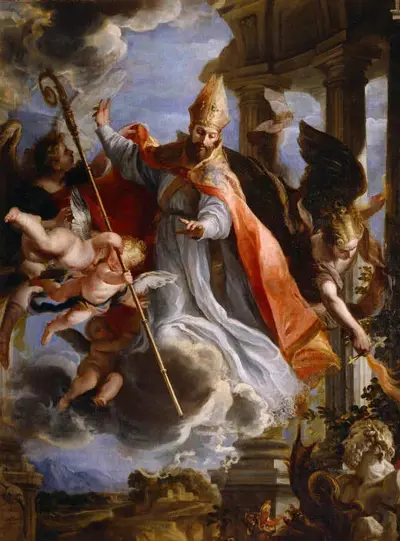
Augustine of Hippo, also known as Saint Augustine, was a theologian, philosopher, and the bishop of Hippo Regius in Numidia, Roman North Africa. His writings influenced the development of Western philosophy and Western Christianity, and he is viewed as one of the most important Church Fathers of the Latin Church in the Patristic Period. His many important works include The City of God, On Christian Doctrine, and Confessions.
