Horace Quotes
Strength, wanting judgment and policy to rule, overturneth itself.
Horace. The Odes and Epodes. Translated by C. E. Bennett, Harvard University Press, 1914, p. 195.


1st Earl Lloyd-George of Dwyfor. England had occupied Iraq, expecting to be welcomed by the natives, but like the George W. Bush ill-fated invasion almost a century afterward calls for withdrawal were met by the same rationale for maintaining the occupation. The English policy makers like the Bush administration were expecting a more welcoming reaction. See {585250}.


1st Earl of Beaconsfield


Young China had toppled the Manchu Dynasty, but once in power, they found it much harder to govern—a common happening after revolution.


This famous quotation has been attributed to Voltaire, 1694-1778, and French Philosopher, Denis Diderot, 1713-1784. Most quotation collections erroneously attribute it to Diderot in the version “Men will never be free until the last king is strangled with the entrails of the last priest.” Both Voltaire and Diderot used the quotation as did many others opposed to monarchy and the then repressive church hierarchies. But the origin of the famous phrase was with Meslier. When the priest died, three handwritten manuscripts were found written and signed by him in which he attacked religion in general and the church and the Bible in particular. His Testament was read by Voltaire and Denis Diderot among others and he was very influential in their development as opponents of organized religion.

Like many other sophisticated Germans, he underestimated Hitler and did not take his writings and statements seriously. Although a fervent Nazi, he detested Hitler. When Hitler consolidated power, one of the first things he did in 1934 was to order his guards to murder Strasser.


The Bank was privately owned. Jackson was a major opponent of the Bank. See his description {630650} .


The Irish had been concentrating so long on fighting for independence that when they got it, they were not prepared to operate a government and different jurisdictions scrambled for power, most not wanting the control government to have much if any.

After the Dutch Revolution, there were many factions—all against the others in a hyperpartisanship that made constructive politics almost impossible.
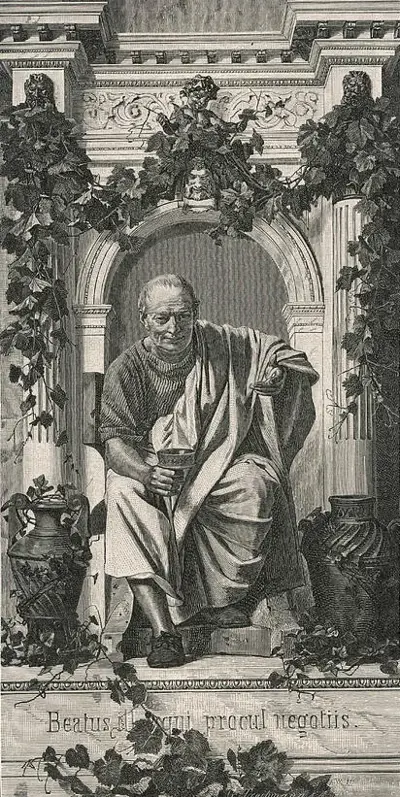
Quintus Horatius Flaccus, known in the English-speaking world as Horace (/ˈhɒrɪs/), was the leading Roman lyric poet during the time of Augustus (also known as Octavian). The rhetorician Quintilian regarded his Odes as just about the only Latin lyrics worth reading: "He can be lofty sometimes, yet he is also full of charm and grace, versatile in his figures, and felicitously daring in his choice of words."
