Simon Bolivar Quotes
States are slaves because of either the nature or the misuse of their constitutions; a people is therefore enslaved when the government, by its nature or its vices, infringes on and usurps the rights of the citizen or subject.
Simon Bolivar,1783-1830, President of Venezuela & Colombia, Founder of Bolivia & Revolutionary leader, Letter from Jamaica, September 6, 1815
Sourced by: Eigen's Political and Historical Quotations


Actually it was Thomas Jefferson who had drafted most of the language. This attack was aimed at President John Adams, the big supporter of the unpopular Alien and Sedition laws, and the man Jefferson was intent on unseating at the end of his first term. He did and destroyed the Federalist Party in the process.


Leary was a strong advocate of the use of illicit drugs and stimulants. Yet he ignored all the side effects and negative health consequences of the processes and while he thought he was assisting people to enlarge their mental horizons, he irresponsibly and criminally damaged many permanently. His government “persecutors” themselves were also all disgraced by the extremes to which they went to prevent the counter-culture characterized by Leary and others. They became paramoid that the drug culture would morph into a protest culture against the administration. The tended to exxagerate the negative consequences of illicit drugs--especially marijuana. These exaggerations caused many people to believe Leary and others who went to the other extreme and underated the negative consequences of illicit drugs. It became a culture war when it should have been a medical problem.


To the pro-slavery politician, abolition was an abdication of government to fulfill it’s 3 major responsibilities. Slaves were private property and government had to safeguard the owner’s right to own that property. Slave owners had always been free in America to hold slaves, and abolition impinged on that freedom. And the slavery advocates knew better than the abolitionists how cruelly the slaves had been treated. They reasoned—that if anyone had treated them that way, they would if they could take revenge and kill the slave owners. Therefore, abolition threatened the lives of Southern citizens. Of course, Brown and his fellow slave-owners did not consider the fact that they had interfered with the right of the slave to own property, they denied him freedom, and in many cases killed slaves as examples or out of neglect. Their “logic” was that slaves were not citizens and therefor were not entitled to these protection.


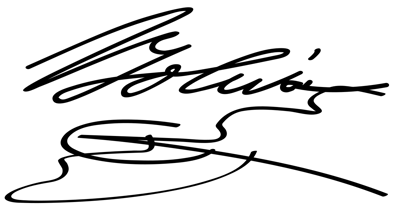
Simón José Antonio de la Santísima Trinidad Bolívar y Ponte Palacios y Blanco (Spanish: [siˈmom boˈliβaɾ] (listen), English: /ˈbɒlɪvər, -vɑːr/ BOL-iv-ər, -ar also US: /ˈboʊlɪvɑːr/ BOH-liv-ar), also colloquially as El Libertador, was a Venezuelan military and political leader who led what are currently the countries of Venezuela, Bolivia, Colombia, Ecuador, Peru, and Panama to independence from the Spanish Empire.
