J. M. Coetzee Quotes
State censorship presents itself as a bulwark between society and forces of subversion or moral corruption. To dismiss this account of its own motives by the state as insincere would be a mistake: it is a feature of the paranoid logic of the censoring mentality that virtue ... must be innocent, and therefore, unless protected, vulnerable to the wiles of vice…. Censorship is not an occupation that attracts intelligent, subtle minds. Censors can and often have been outwitted
John Maxwell "J. M." Coetzee, Australian Nobel Laureate in Literature, Giving Offense
Sourced by: Eigen's Political and Historical Quotations

Hitler came to power arguing for the reform of the permissive society and the censorship of many aspects of the society, not unlike fundamentalist forces which exist today in America and other modern free societies.


There is relatively little freedom of speech in Egypt and most Islamic countries where the traditional Sharia laws prohibiting blasphemy and the tradition of not publicly embarrassing the Caliph or the Sultan, combine to protect the modern Islamic state from criticism. Turkey, Tunisia and a few other Islamic states are exceptions. Under this Egyptian law anyone could be jailed for bringing “shame” to national and Islamic values. On September 6, 1981, the Egyptian Director of Public Health, Dr. Nawal El Saadawi was actually arrested and jailed for three months for saying that women were ill treated in Egypt and the rest of the Arab world. See {586710} for the kinds of statements for which Egypt would jail leading citizens.


For many years, the English Customs Service would prevent books and other literature from being brought into the country if the authorities thought that they were seditious or unwholesome. The right to publish and the right to read was stronger for locally produced sedition or pornography than for imported where there were severe restrictions until recently. America had similar restrictions at the time.


Spinoza’s ideas were considered so radical and dangerous that he was the only man in history who was excommunicated by the Catholics, the Jews and the Muslims. However, we see in Spinoza the observations and foundations of what would become American and then international views of human rights.


This is a very important quotation. The reason is that the Secretary General of the UN backed off and did not support the absolute right of freedom of speech and expression. He favored allowing exceptions. In this case a film was made that was not only intellectually an attack on Islam but it was done in such a manner that most orthodox Muslims were insulted and offended that their Prophet and religion were both insulted in a blasphemous manner. It was a film that was very much in poor taste, insensitive and gross. One major difference between freedom of speech as interpreted by most countries and the United States is that most other nations do not allow and defend hate speech and material that insults a people or their religion or is blatantly blasphemous. The U. S. however protects anyone who blasphemously attacks anyone or any group for any reason. There are a few other nations that protect free speech absolutely but Germany, the United Kingdom, Israel, and India are considered major examples of democracy and freedom and yet they do not protect free speech absolutely. In most Muslim nations, whatever freedom of speech they might have does not apply to blasphemy where Islam is concerned. In most of the Arab nations, there is rank hypocrisy in that freedom of speech is tolerated and protected if there is a blasphemous attack on any other religion such as Christianity, Judaism, Buddhism, or Bhai. This kind of difference on human rights between the U. S. and the UN causes many Americans to oppose the US participation in UN operated courts and projects to protect human rights. Few Americans would favor being a part of an international court system where an American could be convicted of blasphemy for what he had written or said. Essentially, the Secretary General has taken a stand against the United States Constitution and the values of most Americans and many other people of the world like Denmark, or Norway. Offensive and insulting speech is the only kind of speech that needs protection. If speech offends no one, there is no need for its protection.

Virginia had adopted this right almost 20 years before it was added in the Bill of Rights to our Federal Constitution. Mason had drafted it.

This was a description of the post WWII censorship in East Germany under the communists, but it applies to most political censorship in any country. The same dynamics functioned in the United States during both World Wars and during the red scare of McCarthyism.

The President was reacting to a chain of vents whereby Sony Entertainment produced a satiric movie which offended the leadership of North Korea who condemned, threatened and may have launched a cyberattack on Sony. That company reacted by withdrawing the movie and the President thought that was a mistake despite the fact that there were threats against theaters showing the movie and people attending the showings.


Referring to the Erdogan government of Turkey. That country elected Erdogan who then turned his back on the Ataturk inspired democracy and instituted many non-democratic policies and practices including jailing civil servants, teachers and journalists who publicly criticize the president or the government.
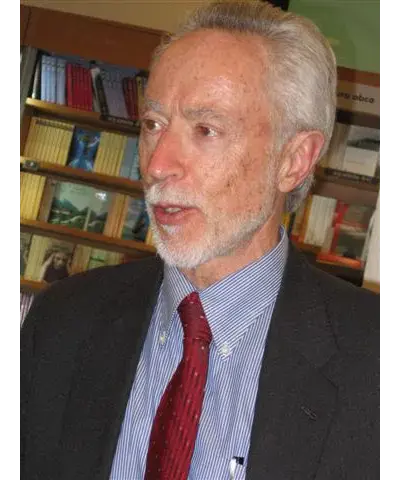
John Maxwell Coetzee is a South African-born novelist, essayist, linguist, translator and recipient of the 2003 Nobel Prize in Literature. He is one of the most critically acclaimed and decorated authors in the English language. He has won the Booker Prize (twice), the CNA Prize (thrice), the Jerusalem Prize, the Prix Femina étranger, and The Irish Times International Fiction Prize, and holds a number of other awards and honorary doctorates.
