George B. McClellan Quotes
Stand by General Burnside as you have stood by me and all will be well.
McClellan, George B. "General Orders, No. 132." The War of the Rebellion: A Compilation of the Official Records of the Union and Confederate Armies, Series I, Vol. XIX, Part II, Government Printing Office, 1887, p. 551.


Sherman and Grant had a relationship that was very rare. They had complete confidence in each other, and total loyalty to each other despite the fact that Grant was occasionally a heavy drinker and Sherman suffered from serious depression that was not understood at the time. They both were extremely popular with their troops despite the fact that they fought hard and often took severe casualties. They both were extremely popular with the public. Grant served two terms as President and Sherman was constantly encouraged by most to go into politics. However, Sherman would not do it.


as the Democratic National Convention Parliamentarian The President, the leader of the Party, was concerned about the likely dispute over the seating of the Mississippi Delegation. The Parliamentarian was the officer who would make the legal rulings on the procedures of the convention. This quotation shows Johnson’s tough style. He wanted to be sure the Parliamentarian would rule the way Johnson wanted regardless of the rules. Boggs’ reply was “I just rule for Johnson. Period.” Johnson then used his influence and Boggs was elected as Parliamentarian.


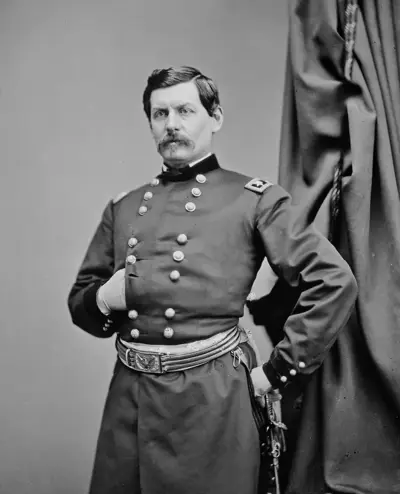
George Brinton McClellan was an American soldier, civil engineer, railroad executive, and politician who served as the 24th Governor of New Jersey. A graduate of West Point, McClellan served with distinction during the Mexican–American War (1846–1848), and later left the Army to work on railroads until the outbreak of the American Civil War (1861–1865). Early in the conflict, McClellan was appointed to the rank of major general and played an important role in raising a well-trained and organized army, which would become the Army of the Potomac in the Eastern Theater; he served a brief period (November 1861 to March 1862) as Commanding General of the United States Army of the Union Army.
