William Barr Quotes
Sometimes regulators are the most reactionary people and are looking backward.
William P. Barr, Attorney General of the United States (Republican), Interview, ABC Capital Sunday, June 11, 2000
Sourced by: Eigen's Political and Historical Quotations


Federal rulemaking is a complicated arcane process as a result of Congress making it harder for Federal agencies to make rules. Although Congress could legislate any rules, many members prefer not to go on ecord as supporting some rules. Others watch what the public reaction is and if good, they support it and take credit and if bad, they complain of the "overreach of unelected bureaucrats". However, they do not want rulemaking to be fast or efficient; they want the time to decide where they stand. IN 2017 The incomming Trump Administration wanted to repeal many of the Federal Rules that had been made in the previous Obama Administration. However Trump and his team was not very experienced politically and ran against the politicians. They were surprised that it was as hard to repeal Federal Rules as it was to make them in the first place as this quotation explained


He and others believe that no matter what regulatioms government officials might impose, Wall Street, the banks and financeers will find a way around the reulations.


He was referring to Fannie Mae, the government-created. private mortage guarantee company. It was heavily regulated, and in general it met the regulatory requirements. However, the requirements were insufficient, and in the 2008 Meltdown and the Great Recession that followed, Fannie Mae itself was in such bad financial condition, that the Federal Government had bail them out or have the entire home mortgage industry fall apart.


This was a very important quotation because Cox was a strong advocate of deregulation and voluntary regulation, and that is why he was appointed to head the SEC by George W. Bush. He was the leading Republican expert on Regulation of the Stock Markets and sale of public securities. However when the Meltdown of 2008 hit, it was clear to all but the extreme ideologues that some Federal regulation was necessary. Nonetheless, it took several years to reform the regulations for the financial industry with the Banks and Wall Street fighting it all the way and by that time the Republican Party had been so dominated by ideological conservatives that the views of Cox and others no longer had much influence. They fought the Dodd-Frank reforms to go preserve self regulation to a great extent.

in the Meltdown of 2008 Gramm was one of the most ideological deregulators in Congress. As the Meltdown of 2008 hit, he immediately made this statement when few people even knew the extent of what had happened, much less why it happened. Gramm’s instant absolution of deregulation as one of the causes is a classic case of denial. There were few economic issues of controversy that did not contribute to the totality of causes. And a few years later Gramm was one of the very few ideologues who still believed that deregulation did not have a role in the Meltdown and the Great Recession that followed. For a contrast from the expert in his own party, see {638023}.
Modern finance is so complex and convoluted, that any laws or regulations that government makes are quickly evaded by even more complex and convoluted schemes which the legislators and regulators have to try and control. By the time they learn and understand and finally develop measures to regulate those, the cycle starts again. Hence the “fool’s errand”
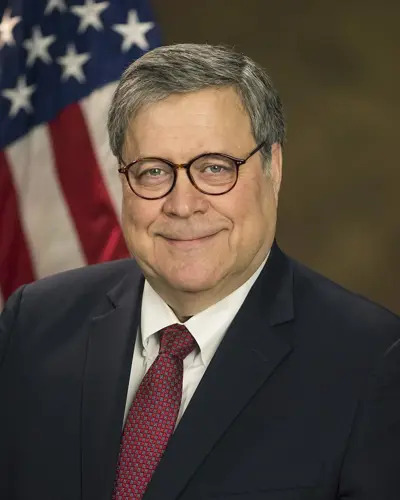
William Pelham Barr is an American attorney who served as the 77th and 85th United States Attorney General in the administrations of Presidents George H. W. Bush and Donald Trump.
