Joseph Stiglitz Quotes
Some people say we have this inequality because some people have been contributing much more to our society, and so it's fair that they get more. But then you look at the people who are at the top, and you realize they're not the people who have transformed our economy, our society.
Stiglitz, Joseph E. The Price of Inequality: How Today's Divided Society Endangers Our Future. W. W. Norton & Company, 2012.


By 2015, the income inequality had gotten so bad that even billionaires were expressing alarm.


The same greatest issue was still before the people a century later. See {633217} , {635104} & {630538}.
This was written in 1933 one of the worst years of the Great Depression. Actualy many upper middle calss and rich people were ruined themselves by the Great Depression, but at the same time the ultra rich were living in a "gildd age" and reveled ostentatiously.


This was one of his great fundamental questions of mankind which his research began to answer.


Explanation for his assassination of President William McKinley:

In France, poor immigrants tended to be clustered into suburban neighborhoods where few jobs were available, the schools were inferior, recreational facilities were sparse, and there were few opportunities to mix with other French residents. Yet, similar correlations between geography and opportunity have existed in almost all parts of the world with the most obvious reflected in the massive worldwide migration to the cities from the rural areas and countryside which took place in the United States in the 20th century and most other nations in the latter part of that century and the beginning of the 21st. Chances in life have been and are very much determined by geography.

The debate about equality and meritocracy often hinges on whether equality in a democracy is equality of results or equality of opportunity.


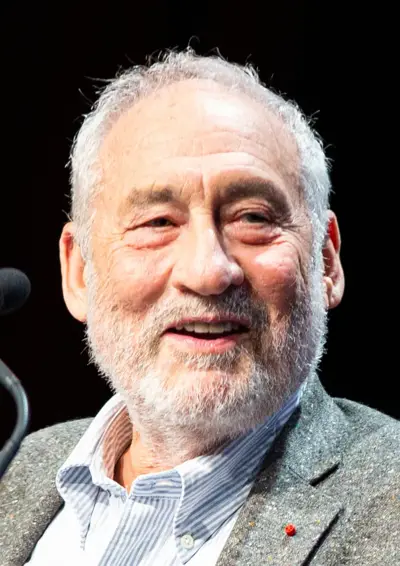
Joseph Eugene Stiglitz is an American economist, public policy analyst, and a professor at Columbia University. He is a recipient of the Nobel Memorial Prize in Economic Sciences (2001) and the John Bates Clark Medal (1979). He is a former senior vice president and chief economist of the World Bank and is a former member and chairman of the (US president's) Council of Economic Advisers. He is known for his support of Georgist public finance theory and for his critical view of the management of globalization, of laissez-faire economists (whom he calls "free-market fundamentalists"), and of international institutions such as the International Monetary Fund and the World Bank.
