William Ellery Channing Quotes
Society was passing through a most critical stage. The French Revolution had diseased the imagination and unsettled the understanding of men everywhere. The old foundations of social order, loyalty, tradition, habit, reverence for antiquity, were everywhere shaken, if not subverted. The authority of the past was gone.
William Ellery Channing, 1780-1842, Unitarian minister and reformer, Quoted in Dorothy C. Broaddus, Genteel Rhetoric: Writing High Culture in Nineteenth-Century Boston, 1999
Sourced by: Eigen's Political and Historical Quotations


The Governor was opposed to all involvement in politics by organizations other than the political parties – especially those which advocated reform. While the League became a non-partisan educational organization, at the time they worked to unseat some of the more sexist legislators including some of Miller’s allies.


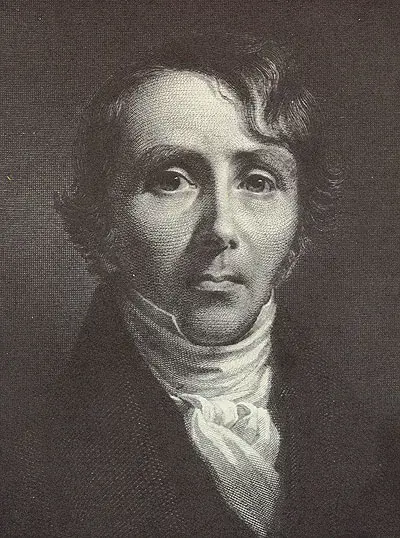
William Ellery Channing was the foremost Unitarian preacher in the United States in the early nineteenth century and, along with Andrews Norton (1786–1853), one of Unitarianism's leading theologians. Channing was known for his articulate and impassioned sermons and public speeches, and as a prominent thinker in the liberal theology of the day. His religion and thought were among the chief influences on the New England Transcendentalists although he never countenanced their views, which he saw as extreme. He espoused, especially in his "Baltimore Sermon" of May 5, 1819, given at the ordination of the theologian and educator Jared Sparks (1789–1866) as the first minister of the newly organized First Independent Church of Baltimore, the principles and tenets of the developing philosophy and theology of Unitarianism, leading to the organization in 1825 of the first Unitarian denomination in America (American Unitarian Association) and the later developments and mergers between Unitarians and Universalists, resulting finally in the Unitarian Universalist Association of America in 1961.
