August Strindberg Quotes
Society is a madhouse whose wardens are the officials and the police.
Strindberg, August. The Son of a Servant. Translated by Claud Field, W. Rider & Son, 1913, p. 152.


At the time, Wallace and many other Southern politicians were leading efforts to undermine the new Civil Rights Laws ending legal segregation. Most Southern police forces had been major vehicles for enforcing segregation and brutally suppressing any protests or demonstrations against segregation. Law enforcement officers had been active in lynchings and murders.


This is a very important quotation. It explains in great part, why there have been so few internal revolutions in Muslim countries. Al-Ghazi’s interpretation of Islamic Law and Theology concluded that even if the ruler is incompetent, corrupt, or destructive he should be supported and obeyed by all good Muslim citizens. The reason was that anarchy and/or chaos was an evil much worse for the Islamic community. There was one exception in the case of a ruler who was blasphemous or did not follow Islam. Then it was the duty of good Muslims. Since then, the ruler of an Islamic state, first seeks to ingratiated himself with the clergy. In Saudi Arabia, for example, the Royal Family gives enormous sums to all the clerics. They then urge dissidents and would be revolutionaries to accept the Royal Family with its flaws and shortcomings and accept their lack of freedom and human rights. And they tell all that the King and his family are all religious and support Islam. Therefore any revolt would be a tantamount to a sin. The Christian world had a different technique for inhibiting Revolution. Christian rulers claimed the Devine Right of Kings—that God had selected and ordained the king to lead. Regime change was contrary to the word of God. In a sense, the Islamic approach is more intellectually honest and seems to have worked much better than the Christians who have had so many revolutions. Better that is from the rulers point of view. From a democratic, Jeffersonian point of view revolting against an evil ruler was almost a moral obligation, and Al-Ghazali’s principle is all wrong and is keeping the Muslim countries from reaching democracy.


The term “magistrates” refers to chief executives such as Governors, Mayors, Kings, etc. and not members of a judicial branch per se. For example the President of the United States is sometimes referred to as the Chief Magistrate of the Nation.”


In the Nez Perce and most other Native American societies, there were Chiefs and occasionally, for special circumstances, War Chiefs, but few if any other officials, thus producing a very flat, egalitarian society. But the whites had many layers of bureaucrats and petty officials. Governors, The President, Members of Congress, State Legislators, Generals, Sheriffs, Indian Agents, tax collectors, and the like. On the Papago Indian reservation, there was great difficulty on a construction project as even the concept of a work foreman was an uncomfortable notion. No Papago wanted to be directed or ordered about by anyone else even on a work gang. And do no one wanted to assume a position of authority or be responsive to a fellow other than the Chief and the tribal elders.

Terror conceptually in France and some other countries was the tool the government used to inhibit criminals.


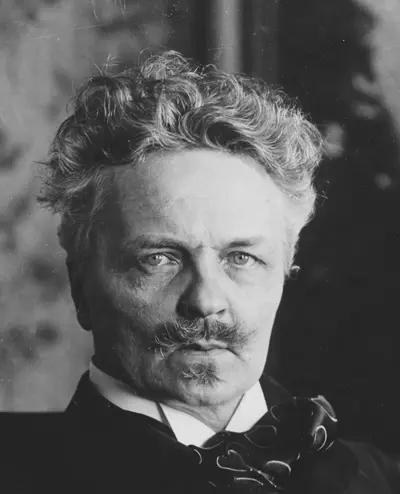
Johan August Strindberg (/ˈstrɪn(d)bɜːrɡ/, Swedish: [ˈǒːɡɵst ˈstrɪ̂nːdbærj] (listen); 22 January 1849 – 14 May 1912) was a Swedish playwright, novelist, poet, essayist and painter. A prolific writer who often drew directly on his personal experience, Strindberg's career spanned four decades, during which time he wrote more than sixty plays and more than thirty works of fiction, autobiography, history, cultural analysis, and politics. A bold experimenter and iconoclast throughout, he explored a wide range of dramatic methods and purposes, from naturalistic tragedy, monodrama, and history plays, to his anticipations of expressionist and surrealist dramatic techniques. From his earliest work, Strindberg developed innovative forms of dramatic action, language, and visual composition. He is considered the "father" of modern Swedish literature and his The Red Room (1879) has frequently been described as the first modern Swedish novel.
