Vladimir Lenin Quotes
Socialists cannot achieve their great aim without fighting against all oppression of nations.
Lenin, Vladimir I. Collected Works. Vol. 21, Progress Publishers, 1964, p. 325.


Although the Nazis railed against the Communists & Socialists, the potential opposition they feared the most was the middle class. See also {582966}.


In 1927 there was a Peasant Uprising in the Hunan Province of China. Young Mau went there and wrote a report. Mao and other young communist leaders had a much more acute appreciation of sloganeering than their older revolutionary comrades. Even into the 3rd millennium, the same “Down with Imperialism” slogan could be heard in many part of the world, long after the Soviet Union collapsed and China and become capitalistic.


Socialist International Anthem. Also adopted by the Communists

This became known as the Brezhnev Doctrine.

The word “smashing” is a literal translation from the Khmer language. It is not used in the metaphorical sense as we are used to. To save money, arms, bullets and resources the Khmer Rouge method of execution was to “smash” the victim’s head in with a shovel or other implement. This slogan told people literally to murder their political enemies in this brutal way.

While he disagreed with Russian policies in any cases, he kept his criticism private but strove to maintain Yugoslavia as a Socialist state and part of the Soviet lock but independent. As his policies more and more deviated from Russian policies, Stalin tried to have Tito assassinated as Tito had his own independent policies on relations with the West.

Xinjiang in Tumult for Seventy Years. This Islamic “nation” had 2 years of existence until 1934. The area is now a part of China. It was ethnographically between the Chinese Han people and the Tungans,
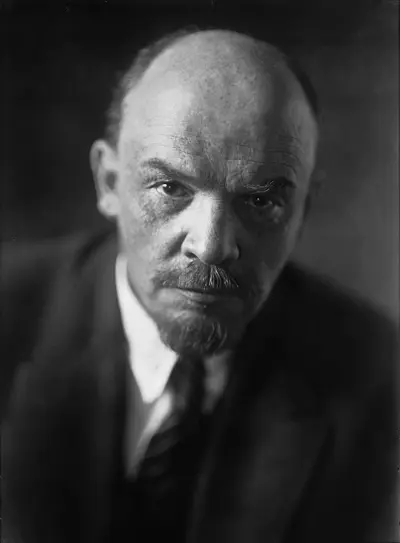
Vladimir Ilyich Ulyanov, better known by his alias Lenin, was a Russian revolutionary, politician, and political theorist. He served as the first and founding head of government of Soviet Russia from 1917 to 1924 and of the Soviet Union from 1922 to 1924. Under his administration, Russia, and later the Soviet Union, became a one-party socialist state governed by the Soviet Communist Party. A Marxist, he developed a variant of this communist ideology known as Leninism.
