Elizabeth Cady Stanton Quotes
Social science affirms that a woman's place in society marks the level of civilization.
Stanton, Elizabeth Cady, et al., editors. History of Woman Suffrage. Vol. 3, Susan B. Anthony, 1886.

Abbot was apparently ignorant of the American women who did fight in the American Revolution, the War of 1812 or the Civil War where there were a few women who fought on both sides some of whom were decorated. Nor did he seem to acknowledge Joan of Arc and other female warriors in world history. But he would be truly shocked by the tens of thousands of “civilized” women who volunteered and served in the American military once they were allowed to do so and the “civilized” men who fought with them as compatriots.


Puglia was an anti-feminist.


He served a jail sentence in Britain for inciting race hatred.

She was the 5th female member of the House and its first Jewish member. She was the first woman on the House Military Affairs Committee, and was one of the few Republicans who advocated spending for military preparedness. At the time of her service, many Republicans were strict isolationists and were opposed to peacetime military spending. They accused the Democrats of being war mongers for wanting preparedness and a stronger military, After WWII, most republicans became Hawks, and after the Vietnam War, many Democrats became Doves. After the Iraq War many Republicans became Doves when they discovered that the President (George W. Bush) had either lied to them and the public, or made a major intelligence blunder.


Her husband had been assassinated. It is not uncommon that after a political assassination, the widow of the slain male politician, carries on the political legacy. But otherwise there are few female politicians in the Third World in general and the Middle East in particular. Arab and other cultures so severely restrict a woman’s mobility within the society that death of a husband or father seems to be the only vehicle whereby a woman enters politics.
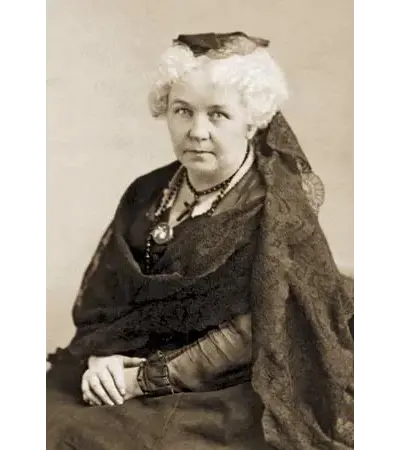
Elizabeth Cady Stanton was a leader of the women's rights movement in the U.S. during the mid- to late-1800s. She was the main force behind the 1848 Seneca Falls Convention, the first convention to be called for the sole purpose of discussing women's rights, and was the primary author of its Declaration of Sentiments. Her demand for women's right to vote generated a controversy at the convention but quickly became a central tenet of the women's movement. She was also active in other social reform activities, especially abolitionism.
