Cesar Chavez Quotes
...So they are trying to do something about it. They are not doing it by seeking charity. They are not begging at the welfare office. They are not, like many of their employers, lobbying the halls of Congress with their gold plated tin cups asking to be paid for not growing crops. They are trying to do it in the way that millions of other Americans have shown is the right way-organization, unionism, collective bargaining.
Chavez, Cesar. "Statement to the Senate Subcommittee on Migratory Labor." 1969. The Words of César Chávez, edited by Richard J. Jensen and John C. Hammerback, Texas A&M University Press, 2002, p. 55.


This statement from an avowed Marxist illustrates the complexity of the Cold War. Marxists and Communists like Pannekoek felt that there had to be a workers’ movement to overcome the capitalist interest in a nuclear arms race. However, they also believed that Russia had botched communism so badly that there could be no workers’ movement in the Soviet Union because of the repression. Only in America they believed could the impetus for disarmament come.


Ironically, this view was also held by many of the capitalist “Captains of American Industry” who believed that all unions were revolutionist regardless of the views of the union’s membership or leadership. Even today, there are some who still equate trade unionism with communism and revolution. The majority of the unions and the left never believed that, but the extreme communists and extreme capitalists did than and some do today.

Roosevelt shocked the conservative members of his own party with this statement. Labor unions were not then an accepted concept in American society. Anti trust legislation and enforcement was in its infancy and companies in an industry commonly conspired as to price fixing, labor negotiations and market share allocations. TR had a scrupulous sense of fairness and equity.


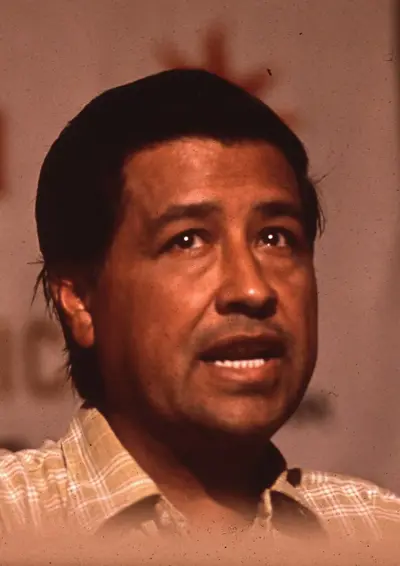
César Estrada Chávez was an American labor leader and civil rights activist. Along with Dolores Huerta, he co-founded the National Farm Workers Association (NFWA), which later merged with the Agricultural Workers Organizing Committee (AWOC) to become the United Farm Workers (UFW) labor union. Ideologically, his world-view combined leftist politics with Roman Catholic social teachings.
