Antony Flew Quotes
So multiverse or not, we still have to come to terms with the origin of the laws of nature. And the only viable explanation here is the divine Mind.
Flew, Antony, and Roy Abraham Varghese. There Is a God: How the World's Most Notorious Atheist Changed His Mind. HarperOne, 2007, p. 121.


The original was in German. Spinoza was a Dutch Philosopher who originated this abstract notion of a universal God. This was one of the reasons fro his excommunication. Spinoza’s ideas were considered so radical and dangerous that he was the only man in history who was excommunicated by the Catholics, the Jews and the Muslims.

His concept of the devine however was quite different and much more abstract than the Rabbis, Priests and Imams of the time. Albert Einstein, was a religious Jew, but his view of God was that of Spinoza (See Quotation 631763) who had been excommunicated by the Jews. Spinoza’s ideas were considered so radical and dangerous that he was the only man in history who was excommunicated by the Catholics, the Jews and the Muslims. Spinoza did not believe in a kins of anthropromorphic God who fabricated the earth and the stars. He saw God in the devine nature of the earth and the heavens and the mathematical rules that govern everything. It was this abstraction that was Spinoza's God which made sense to Einstein. Got was in the order, physical laws and mathematics of the universe. Modern scientists who are religious have no difficulty with the probablsitic nature of much of the physics that governs the univrese. It was God who created or more abstractly, was the mathematical and physical laws that in turn allowed the universe to be created from nothing.


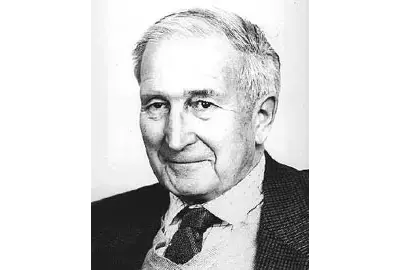
Antony Garrard Newton Flew was an English philosopher. Belonging to the analytic and evidentialist schools of thought, Flew was most notable for his work related to the philosophy of religion. During the course of his career he taught at the universities of Oxford, Aberdeen, Keele and Reading, and at York University in Toronto.
