Friedrich Nietzsche Quotes
So far there has been no philosopher in whose hands philosophy has not grown into an apology for knowledge; on this point, at least, every one is an optimist, that the greatest usefulness must be ascribed to knowledge. They are all tyrannized over by logic, and this is optimism in its essence.
Nietzsche, Friedrich. The Will to Power. Translated by Walter Kaufmann and R. J. Hollingdale, Vintage Books, 1968, p. 225.


This quotation illustrates a major difference between scientists and politicians. When a politician changes a major position, he/she tends to feel obligated to explain or apologize as if he/she might have done something wrong. An explanation is certainly required. This contrasts with the scientist who has a change of mind. He/she just states it and moves on. If data changes and more is learned all scientists expect views to change, and the progress of science can be measured by the number of these changes. For a similar view from the political world, consider {619441} .


Spinoza’s ideas were considered so radical and dangerous that he was the only man in history who was excommunicated by the Catholics, the Jews and the Muslims.


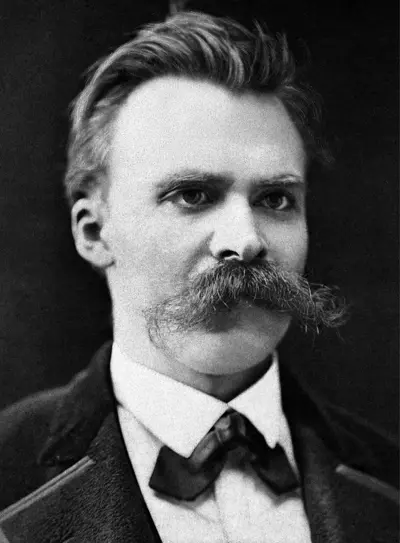
Friedrich Wilhelm Nietzsche was a German philosopher, cultural critic, composer, poet, writer, and philologist whose work has exerted a profound influence on modern intellectual history. He began his career as a classical philologist before turning to philosophy. He became the youngest person ever to hold the Chair of Classical Philology at the University of Basel in 1869 at the age of 24. Nietzsche resigned in 1879 due to health problems that plagued him most of his life; he completed much of his core writing in the following decade. In 1889, at age 44, he suffered a collapse and afterward a complete loss of his mental faculties. He lived his remaining years in the care of his mother until her death in 1897 and then with his sister Elisabeth Förster-Nietzsche. Nietzsche died in 1900.
