Sam Graves Quotes
Small lending institutions lack the capability of their larger counterparts to hire the additional manpower necessary to deal with the hundreds of additional regulations created by Dodd-Frank.
United States, Congress, House, Committee on Small Business. The Effects of the Dodd-Frank Act on Small Financial Institutions and Small Businesses. Government Publishing Office, 2012.


The Dodd Frank bill was designed, in the aftermath of the large bank induced meltdown of 2008 and the Great Recession, to regulate the banking industry so that no bank would be “too big to fail”. However, although the bill placed many restrictions on the banks to prevent much of their risky economic behavior, which the banks complained inhibited their growth and profitability. However, the bill did not put any limits on the size of the large banks and their critical proportion of the U. S. Financial System. If a bank was large enough, the government did not dare allow the bank to fail regardless of how profligate the Bank had been with its depositors’ money. So the shareholders made big money from the Bank’s risky behavior if it turned out well, and if not the taxpayers had to bail the banks out, because they were too big to fail without causing much of the rest of the country to also fail. Warren and others wanted a simple solution. Break up the large banks into smaller ones and then if any one of the small units makes poor investments, the bank could fail and other than its shareholders and creditors, the effect would not be so serious that the government could not allow the bank to go into bankruptcy. Mismanaged banks could fail like other mismanaged companies and not take down much or the rest of the country with them. But the banks lobbied to prevent that, and by 2014, 6 years after the taxpayers had to bail out banks that were too big to fail, many of the banks were twice as large as they were when they were already too big to fail.


This practice to try and derail bills they objected to emanated from the hyperpartisanship of the time. The conservative base of voters so opposed the legislation that they would not punish and not vote for a member of Congress for deliberately lying as long as the lies contributed to the conservative political ideology. Some of the members had this as a justification for lying in this way: “These provisions are exactly what the Democrats would add as an amendment or by regulations if they could. It is important that the voters know that they will do if the legislation passes and realize that they people who support this terrible legislation really desire to socialize the American Economy.” Often, they would base their judgment about what the Democrats wanted by taking a single statement made by someone at the extreme left and claim that that was Democratic party thinking. The tactic worked in a number of cases, but not with Dodd-Frank which passed despite a Republican filibuster in the Senate. Some of the extreme liberals in Congress then started to use the techniques in the House of Representatives where they were in the minority.


the largest economic and banking reform in decades The Dodd-Frank reform legislation was very complicated. It was extensively debated including attacks against provisions that were not even in the bill (See {632833}.) Few of the supporters and fewer of the opponents understood the bill. Many members on both sides had not even read the entire bill. It passed.


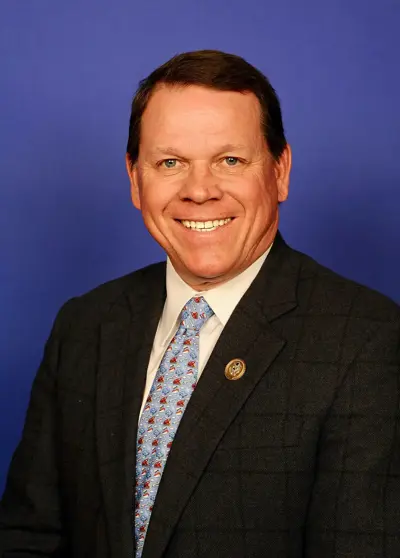
Samuel Bruce Graves Jr. is the United States Representative for Missouri's 6th congressional district, serving since 2001. He is a member of the Republican Party. The district stretches across most of the northern third of the state, from the Kansas border to the Illinois border. The bulk of its population lives in the northern part of the Kansas City area, including the northern fourth of Kansas City. Graves is the dean of Missouri's House delegation.
