Thomas Huxley Quotes
Size is not grandeur, and territory does not make a nation.
Thomas Huxley, 1825-1895, British Biologist & President of the Royal Society, On University Education, 1876
Sourced by: Eigen's Political and Historical Quotations


This phrase was originally an ancient Roman one: A mari usque ad mare.


William the Conqueror. The King had come ashore and fell forward in the sand on his face and hands. Showing a sense of humor, he hade this statement. Shortly thereafter he took England militarily at Hastings and seized it politically.


A group of citizens of Mecklenburgh County, NC gathered together and produced their own “Declaration of Independence” a little over a year before The Declaration of Independence of July 4, 1776. Some people refer to the earlier document as the Mecklenburgh Declaration of Independence. It is not known how much Alexander personally wrote however he signed as the Chairman of the convention. The delegates voted to send a copy to the Continental Congress, and the reader will recognize some of the similar language which found its way into the 1776 document. The Mecklenburgh Resolution also contained a structure of government.


Each of the Dutch provinces and towns was relatively independent with no central or federal government that could organize or bring consistency to Holland. Each city and community had their own military with no common command, training, logistics, weapons or other common elements that the times began to require. The representatives from Rotterdam made this public declaration for a unified—federal—government.


Howe had written Franklin attempting to stave off a American break with England. Franklin, with the approval of the Continental Congress, replied. This line was a veiled warning of a type of “domino effect” which indeed came to pass.


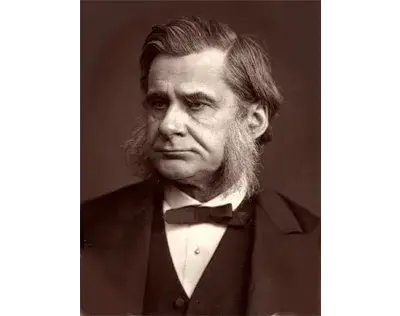
Thomas Henry Huxley PC FRS HonFRSE FLS was an English biologist and anthropologist specialising in comparative anatomy. He is known as "Darwin's Bulldog" for his advocacy of Charles Darwin's theory of evolution.
