Tom Reiss Quotes
Since 2002, there has been a wave of attacks against Jewish 'persons or property' in France, a great many of them committed by young men living outside Paris, in the vast ghettos called les banlieues.
Reiss, Tom. The New Yorker, Condé Nast.


This was one of the most hateful of his public speeches. He was one of the American “heroes” in Nazi Germany, receiving assistance from the Nazi government. Between his anti-Semitism and support for Hitler, Fascism and radical socialism, the Vatican ordered him off the air and shut down his political demagoguery.

In his early years, Stalin was a strong opponent of Anti-Semitism ({627514}) but he felt he needed to make a pact with Nazi Germany—the Hitler-Stalin Pact. In meeting with Nazi Foreign Minister Ribbontrop, Stalin as a quid pro quo promised to get rid of “Jewish Domination” (which never existed but there were many Jews in positions) among officials and intellectuals. He then fired his Jewish Foreign Minister Litvonof and replaced him with Vyacheslav Molotov to whom he have this instruction. This was the first major official Anti-Semitism of the Soviet Union but it continued thereafter. See {636526} & {636527}.


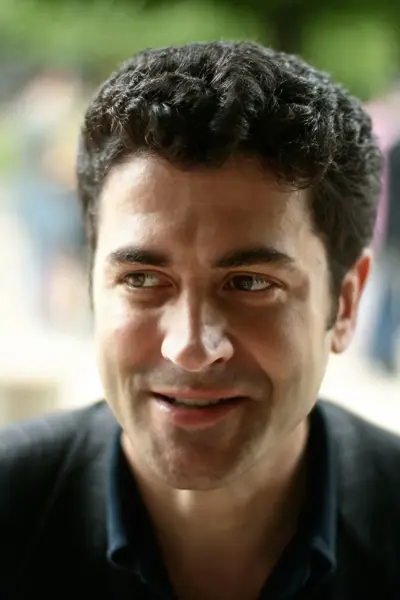
Tom Reiss is an American author, historian, and journalist. He is the author of three nonfiction books, the latest of which is The Black Count: Glory, Revolution, Betrayal, and the Real Count of Monte Cristo (2012), which received the 2013 Pulitzer Prize for Biography or Autobiography. His previous books are Führer-Ex: Memoirs of a Former Neo-Nazi (1996), the first inside exposé of the European neo-Nazi movement; and The Orientalist: Solving the Mystery of a Strange and Dangerous Life (2005), which became an international bestseller. As a journalist, Reiss has written for The New Yorker, The Wall Street Journal, and The New York Times.
