John Calvin Quotes
Their [the Jews] rotten and unbending stiffneckedness deserves that they be oppressed unendingly and without measure or end and that they die in their misery without the pity of anyone.
Calvin, John. "Ad Quaestiones et Obiecta Iudaei Cuiusdam Responsio." Ioannis Calvini Opera Quae Supersunt Omnia, edited by Wilhelm Baum et al., vol. 9, C.A. Schwetschke and Son, 1870, p. 657.


Vladimir Lenin. Despite Lenin’s abhorrence of anti-Semitism, there were any other Russians for whom it was normal. After Lenin’s death, Stalin and his henchmen used anti-Semitism to divert attention from the Communist Party’s failure to meet its economic and other goals.


The irony was that Breen was in charge of the Motion Picture censorship at a time when he personally could block any motion picture from being exhibited by withholding the Hollywood Production Seal of Approval. He was not only a virulent anti-Semitic but prohibited things like scenes with a double bed rather than twin beds for married couples.


Mather was urging the community to protect their children against the Devil and his band. To exemplify just how terrible Devils were to his audience, he used a comparison to the worst thing the audience was familiar with—Indians. Although there were a few examples in Colonial America of Indians being perceived as benign or even people, they were few and far between, and tended to be in New York and Pennsylvania.


Many people have believed that the Nazis introduced anti-Semitism into German society and politics. This quotation is one of the very many what show that anti-Semitism was rife in Germany before Hitler ever came to power—back to the Dark Ages. The Nazis recognized it and took advantage of it by ascribing all of Germany’s ills to the Jews, knowing full well that there was underlying public opinion that would make that a good tactic.


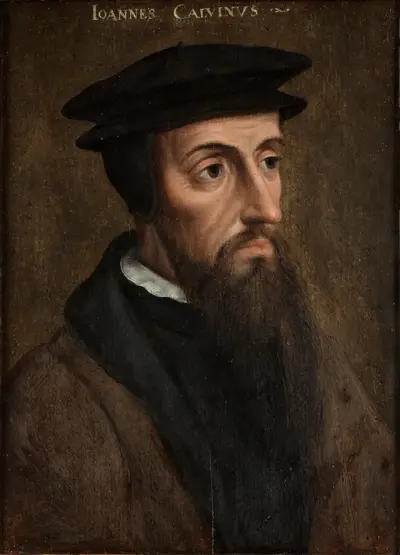
John Calvin was a French theologian, pastor and reformer in Geneva during the Protestant Reformation. He was a principal figure in the development of the system of Christian theology later called Calvinism, aspects of which include the doctrines of predestination and of the absolute sovereignty of God in salvation of the human soul from death and eternal damnation, in which doctrines Calvin was influenced by and elaborated upon the Augustinian and other Christian traditions. Various Congregational, Reformed and Presbyterian churches, which look to Calvin as the chief expositor of their beliefs, have spread throughout the world.
