Sophocles Quotes
Silence is the greatest ornament of the woman.
The "wisdom" of the Ancient Greek world included ideas detramental to society like these. The sexist view that women--like children--should not express their opinions and remain silent had its roots in the Ancient world where this "principle" was elucidated.
Sophocles, c. 496-406 BC, Greek Tragedian, Quoted on PBS, Athens: The Dawn of Democracy, Part I,, November 19, 2007
Sourced by: Eigen's Political and Historical Quotations


Akin had made some incredibly incorrect and stupid statements regarding rape and female physiology (see {633199}). His opponent Senator Claire McCaskill attacked him aggressively for that. Akin generally regarded as a extreme conservative fundamentalist then made matters worse by equating aggressive female behaviors in campaigning to not being “ladylike”. He lost the election where the Republicans had a good chance of winning.


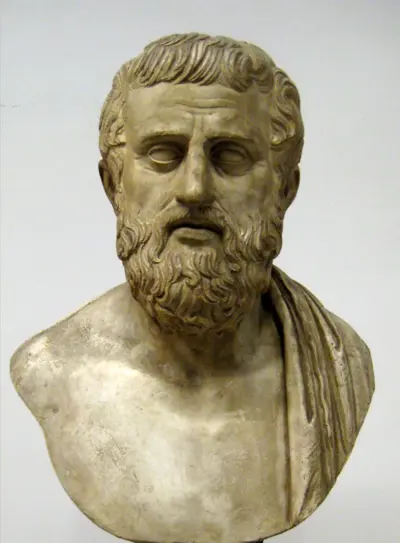
Sophocles (/ˈsɒfəkliːz/; Greek: Σοφοκλῆς, pronounced [so.pʰo.klɛ̂ːs]; c. 497/6 – winter 406/5 BC) is one of three ancient Greek tragedians whose plays have survived. His first plays were written later than, or contemporary with, those of Aeschylus; and earlier than, or contemporary with, those of Euripides. Sophocles wrote over 120 plays, but only seven have survived in a complete form: Ajax, Antigone, Women of Trachis, Oedipus Rex, Electra, Philoctetes and Oedipus at Colonus. For almost fifty years, Sophocles was the most celebrated playwright in the dramatic competitions of the city-state of Athens which took place during the religious festivals of the Lenaea and the Dionysia. He competed in thirty competitions, won twenty-four, and was never judged lower than second place. Aeschylus won thirteen competitions, and was sometimes defeated by Sophocles; Euripides won four.
