Hans Kung Quotes
Second, we also got a more authentic liturgy of the people of God, in the vernacular language.
Küng, Hans. "Religion, World Ethos, and Global Politics." Interview by Harry Kreisler. Conversations with History, Institute of International Studies, UC Berkeley, 2005.


This quotation which appears on the surface to be simply a petulant Pope overreacting to some criticism about the church doctrine and custom of holy communion, was the trigger for one of the most momentous events in Western history—the schism between the Roman Catholic Church and the Eastern Orthodox Church." Bruno of Egisheim-Dagsburg (German)


His reference was to an absence of very much religious language in American documents of the founding fathers. While some founding fathers were very religious, and all knowledgeable about religion, Meacham argues from the Constitution, the Declaration of Independence, The Bill of Rights, the Federalist Papers, and many other documents of the founding of America that the absence of religious language that was present in much other literature, demonstrates a conscious effort to assure that there would be separation of church and state for they had seen the horrors of interreligious strife in Europe and were very cognizant about the problems caused in early Colonial America by established religions.


The struggle in the Catholic Church reached an amazing state. Just after a new pope, Martin V, had been elected the Council of Bishops at Constance came up with this notion which placed their views above those of the Pope under the theory that this particular council derived its power and authority directly from Christ while the pope was only God’s “vicar on earth.” The struggle was somewhat akin to the inevitable struggle for power between an executive branch and a legislative branch. The Council’s ascendancy didn’t last very long and was repudiated by successive popes.


In some countries political candidates run on religious platforms to convert the part of the population that is not of their religion and turn the nation into a theocracy.

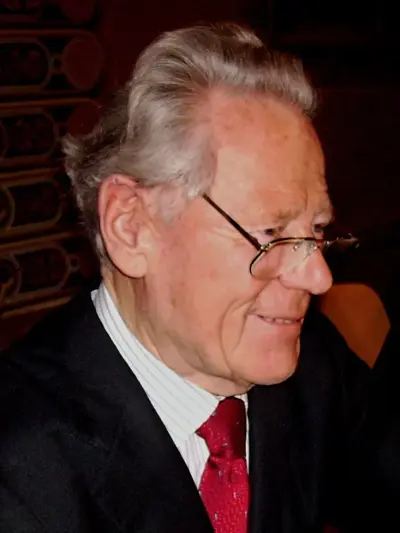
Hans Küng was a Swiss Catholic priest, theologian, and author. From 1995 he was president of the Foundation for a Global Ethic (Stiftung Weltethos).
