Lisa Randall Quotes
Scientific experiments are expensive, and people are entitled to know about them if they want to. I think it is very difficult to convey ideas.
Randall, Lisa. "Defending Science." The New York Times, 1 Oct. 2011.


Senator Dianne Feinstein, Chairman of the Senate Intelligence Committee, had released an unclassified Summary of the Committee Report on the CIA using torture and perverse treatment of suspect terrorists in the aftermath of the 9-11 attack on New York. Most Republicans argued vehemently that the Report should be classified and kept secret as the CIA behavior was so egregious, unpalatable, and morally reprehensible that there would be negative consequences including perhaps demonstrations and attacks against Americans in foreign countries. Moreover, Terrorist organizations would use the heinous CIA behavior as a recruiting tool for anti-American terrorists. McCain, who had himself been the victim of North Vietnamese torture cited the moral and ethical reasons to prohibit torture but also explained what has been proven over and over again that torture victims will tell the torturer any nonsense that they think the torturer might believe just to get obtain relief from the agony of the torture.


This quotation not only illustrates the discomfort of the atomic scientists who developed the atomic bomb regarding the ethics and decision making regarding use, but also how complex a man Teller himself was. Here he sounds like a left-leaning centrist. A little later he would side with the hawks in the military and the political world and slander his colleague Oppenheimer publicly advocating an arms race and the development of the hydrogen bomb when the existing technology of the atom bomb could wipe out Russia or any other nation. His new allies however kept everything about nuclear weapons a secret and thus the public could never weigh in and influence any nuclear decision making. This state existed until President Eisenhower declassified much of the nuclear weapons information as part of his Atoms for Peace program.


The executive order to which this statement referred was the then new President’s first—Executive Order 13489. It was enthusiastically received by the public, historians, researchers and the media. However at the end of Obama’s two administrations, the system was a little better than when George W. Bush, blocked much of the Freedom of Information Act from being implemented. However, the agencies who want to operate in secrecy without having to deal with public criticism, had developed even more sophisticated techniques of avoiding transparency and when they must disclose, they have developed techniques to delay the process, sometimes even for years, while they study whether the material should be disclosed. The president personally declassified a few CIA files from decades ago that the agency maintained should be secret, but he did nothing else systemic so solve the problem of declassifying and material and nothing to control the over classification which virtually everyone agrees is a major problem. More material is being classified than ever.


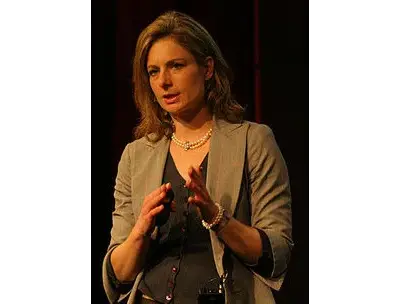
Lisa Randall is an American theoretical physicist working in particle physics and cosmology. She is the Frank B. Baird, Jr. Professor of Science on the physics faculty of Harvard University. Her research includes elementary particles, fundamental forces and dimensions of space. She studies the Standard Model, supersymmetry, possible solutions to the hierarchy problem concerning the relative weakness of gravity, cosmology of dimensions, baryogenesis, cosmological inflation, and dark matter. She contributed to the Randall–Sundrum model, first published in 1999 with Raman Sundrum.
