Subrahmanyan Chandrasekhar Quotes
Science is a perception of the world around us. Science is a place where what you find in nature pleases you.
Wali, Kameshwar C. Chandra: A Biography of S. Chandrasekhar. University of Chicago Press, 1991.


This is a very important quotation because it illustrates a large difference between ideological politics and science and scientific thinking. As an example, one of the must fundamental rules of conservative Republicans at the beginning of the 21st century was that “If taxes are raised, the economic consequences will be that growth and development of jobs will slow. In the last 6 years of Ronald Reagan’s administration, he raised taxes. Yet the economy grew. In the early years of the Clinton administration income tax rates were increased, and America had the greatest growth rate in modern times as well as a balanced budget with a surplus. There have been a few other examples of “exceptions” to this “rule.” There were also many examples where the rule held. However, from a scientific point of view, with the FIRST exception the rule (principle) was invalidated. Yet Republicans continue to use and quote the rule which is clearly untrue. The scientist would likely have amended the rule to reflect reality: “In many cases, raising income tax rates will often slow economic growth.” However, politicians commonly state principles and rules despite the fact that there are exceptions. As for the statement “the exception proves the rule” there are few as absurd. One exception means no valid rule.


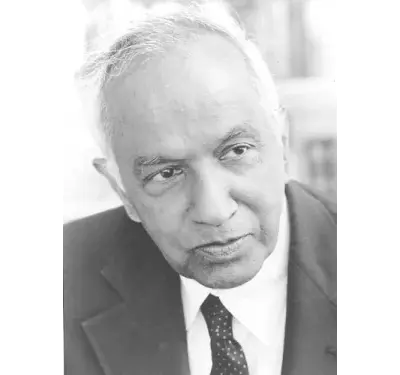
Subrahmanyan Chandrasekhar FRS (pronunciation) was an Indian-American astrophysicist who spent his professional life in the United States. He was awarded the 1983 Nobel Prize for Physics with William A. Fowler for "...theoretical studies of the physical processes of importance to the structure and evolution of the stars". His mathematical treatment of stellar evolution yielded many of the current theoretical models of the later evolutionary stages of massive stars and black holes. The Chandrasekhar limit is named after him.
