George Henry Lewes Quotes
Science as we now understand the word is of later birth. If its germinal origin may be traced to the early period when Observation, Induction, and Deduction were first employed, its birth must be referred to that comparatively recent period when the mind, rejecting the primitive tendency to seek in supernatural agencies for an explanation of all external phenomena, endeavoured, by a systematic investigation of the phenomena themselves to discover their invariable order and connection.
Lewes, George Henry. Aristotle: A Chapter from the History of Science, Including Analyses of Aristotle's Scientific Writings. Smith, Elder and Co., 1864, p. 42.


This is one of the first written statements that primary causes should be studied by man and not just accepted as mysteries created by God. At the time, all of the sciences and mathematics were considered part of natural philosophy.


This was a time when the church and establishment only recognized the Bible and the views of the authorities as a means of knowing and validating knowledge. By appealing to the individual’s own judgment and empiricism he was far ahead of his time. See {586127}.


Much of modern science involves non-intuitive concepts that can rarely if ever be discovered using common sense. It was hard enough for most people to accept the notion of an infinite number, but now we know that there are many infinite numbers and they are all different form one another. Darwinian thinking was contrary to most learned thought of the day, and even much public opinion today. Even Albert Einstein had to struggle to comprehend the findings of Quantum Mechanics which are very non intuitive—one object can be in two different places at the same time. Meanwhile, most people are totally unaware that the world around is does not correspond to normal human intuition and common sense. Yet these are the same and only tools that we continue to use in making decisions about our society. And the fundamental truths of yesterday, the foundation of past thinking and glory, are the naïve simplifications and errors of today and become the superstitions of tomorrow.


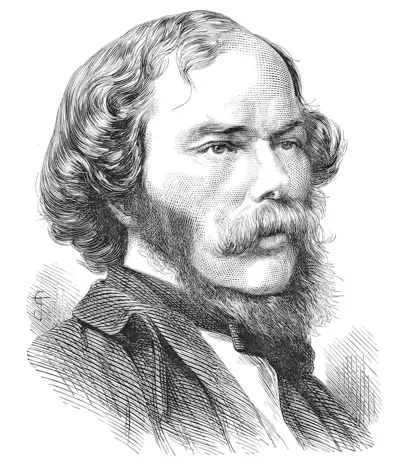
George Henry Lewes was an English philosopher and critic of literature and theatre. He was also an amateur physiologist. American feminist Margaret Fuller called Lewes a "witty, French, flippant sort of man". He became part of the mid-Victorian ferment of ideas which encouraged discussion of Darwinism, positivism, and religious skepticism. However, he is perhaps best known today for having openly lived with Mary Ann Evans, who wrote under the pen name George Eliot, as soulmates whose lives and writings were enriched by their relationship, though they never married each other.
