Harriet Martineau Quotes
Scarcely anything that I observed in the United States caused me so much sorrow as the contemptuous estimate of the people entertained by those who were bowing the knee to be permitted to serve them.
Martineau, Harriet. Society in America. Vol. 1, Saunders and Otley, 1837, p. 12.


This was the prevailing view in Europe at the time; it was less so in the United States, where there were so many people who owned their own land and farmed it or developed manufacturing facilities and hence were the mind AND the limbs of the enterprises. However, the upper classes tended to agree with the European view. The difference between the American and European views was one of class mobility. In America “limbs” who demonstrated capacities of “mind” were much more able to advance in America. However, even into the 21st century here was a general feeling of the upper class that the “minds” made the critical and impactful decisions. This is one of the reasons that executive and CEO pay advanced so rapidly when compared with workers (the “linbs”).

Many Indians follow a rigid caste system where all people are born and divided into 5 social castes which are immutable—there is no caste mobility. An “untouchable” –the lowest Indian Caste—even if he make a million dollars—is still an untouchable and the higher casts would have nothing to do with him. Most upper caste people would not allow an untouchable physician to treat him or an untouchable cook to prepare his food. The Caste system is illegal under Indian law, but the majority of the Indians still follow it.


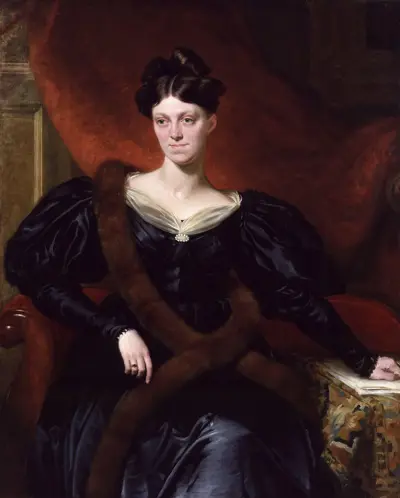
Harriet Martineau was an English social theorist and Whig writer often seen as the first female sociologist. She wrote many books and essays from a sociological, holistic, religious, domestic and feminine perspective, translated works by Auguste Comte, and earned enough to support herself by writing, a rare feat for a woman of her period. The young Princess Victoria enjoyed reading her and invited her to her coronation in 1838. Martineau said of her approach, "One must focus on all [society's] aspects, including key political, religious, and social institutions." She believed thorough analysis was needed to understand women's status under men. The novelist Margaret Oliphant said "as a born lecturer and politician... less distinctively affected by her sex than perhaps any other, male or female, of her generation."
