Garrett Hardin Quotes
Ruin is the destination toward which all men rush, each pursuing his own best interest in a society that believes in the freedom of the commons.
Hardin, Garrett. "The Tragedy of the Commons." Science, vol. 162, no. 3859, 1968, p. 1244.


Like many ideological political philosophers who developed a following, she tended to exaggerate many of her points and to ignore additional factors. While individual businessmen and politicians pursuing their self interests were certainly necessary for America’s great growth and success, they were not sufficient. Many of the founding fathers sacrificed their fortunes and in some cases their lives to gain American independence. And the sacrifice of millions was necessary in many conflicts were those who fought were rarely enlarging their own fortunes. And equally important factors of American success were the collective action of communities creating schools, roads, bridges, canals. The driver of the businessmen to move into critical areas was the government subsidizing the railroads, proving the telegraph useful, developing the national highway system and the Internet. Most of the great universities and research centers were created as government, charitable or religious institutions where personal profit was not a factor. It is that combination of private and public, self serving and communitarian drives, secular and religious that have created modern America. Many people in Rand’s ere did not credit the private, self serving contributions of many great men, and Rand led the movement to remind all of that critical factor. In the process of making her good point, she tended to ignore the other factors.


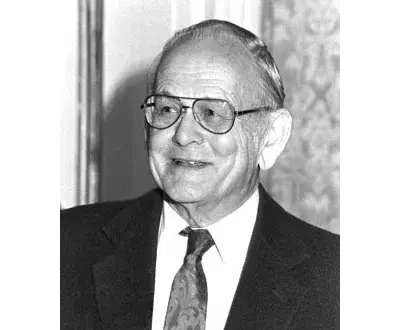
Garrett James Hardin was an American ecologist who warned of the dangers of human overpopulation. He is most known for his exposition of the tragedy of the commons, in a 1968 paper of the same title in Science, which called attention to "the damage that innocent actions by individuals can inflict on the environment". He is also known for Hardin's First Law of Human Ecology: "We can never do merely one thing. Any intrusion into nature has numerous effects, many of which are unpredictable.":112 He is listed by the Southern Poverty Law Center as a white nationalist, whose publications were "frank in their racism and quasi-fascist ethnonationalism".
