Claudette Colvin Quotes
Rosa Parks wasn't the first one to rebel against the segregated seats. I was the first one.
Hoose, Phillip. Claudette Colvin: Twice Toward Justice. Farrar, Straus and Giroux, 2009.


Freedom Rides were interracial groups of Civil Rights advocates who boarded public interstate busses in Washington and rode South through some of the most segregated communities in the country. As the bus stopped at the segregated rest stops, the Black Freedom Riders would use the “white” waiting rooms, toilets, and other facilities which was against the local custom and law. Racist segregationists often brutalized and assaulted the Freedom riders whose leaders demanded Federal Protection. The Attorney General and others were trying to get the local politicians and law enforcement officials to protect the Freedom Riders, but often these were the worst of the racist segregationists. Kennedy thought if he could have a “cooling off period” for a few days, he could persuade the locals to protect the Freedom Riders from the mobs with the threat of sending Federal Marshalls or troops for the protection. So he asked Farmer and other Freedom Ride organizers to stop the Freedom Rides for a few days. This was Farmer’s famous response. The Freedom Rides continued and forced the Federal Government to respond on a timetable they did not prefer.

The South was segregated at the time and Negroes were required by law to sit in the back of the busses. There were no seats left in the back and Ms. Parks sat in the “white” section causing her to be arrested. That act ignited public opinion, led to Black boycotts of segregated busses, and morphed into the civil rights movement.


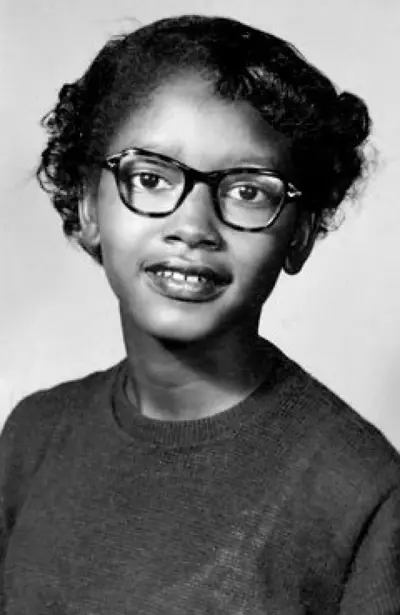
Claudette Colvin is a pioneer of the 1950s civil rights movement and retired nurse aide. On March 2, 1955, she was arrested at the age of 15 in Montgomery, Alabama, for refusing to give up her seat to a white woman on a crowded, segregated bus. This occurred nine months before the more widely known incident in which Rosa Parks, secretary of the local chapter of the National Association for the Advancement of Colored People (NAACP), helped spark the 1955 Montgomery bus boycott.
